Read More

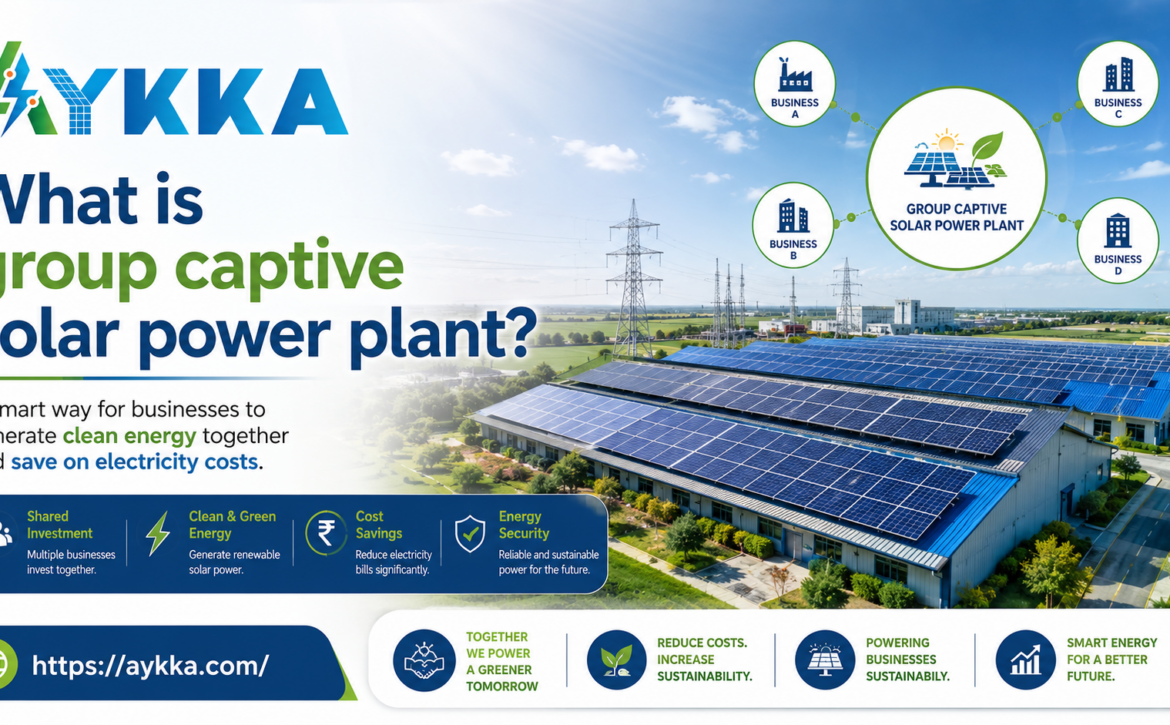
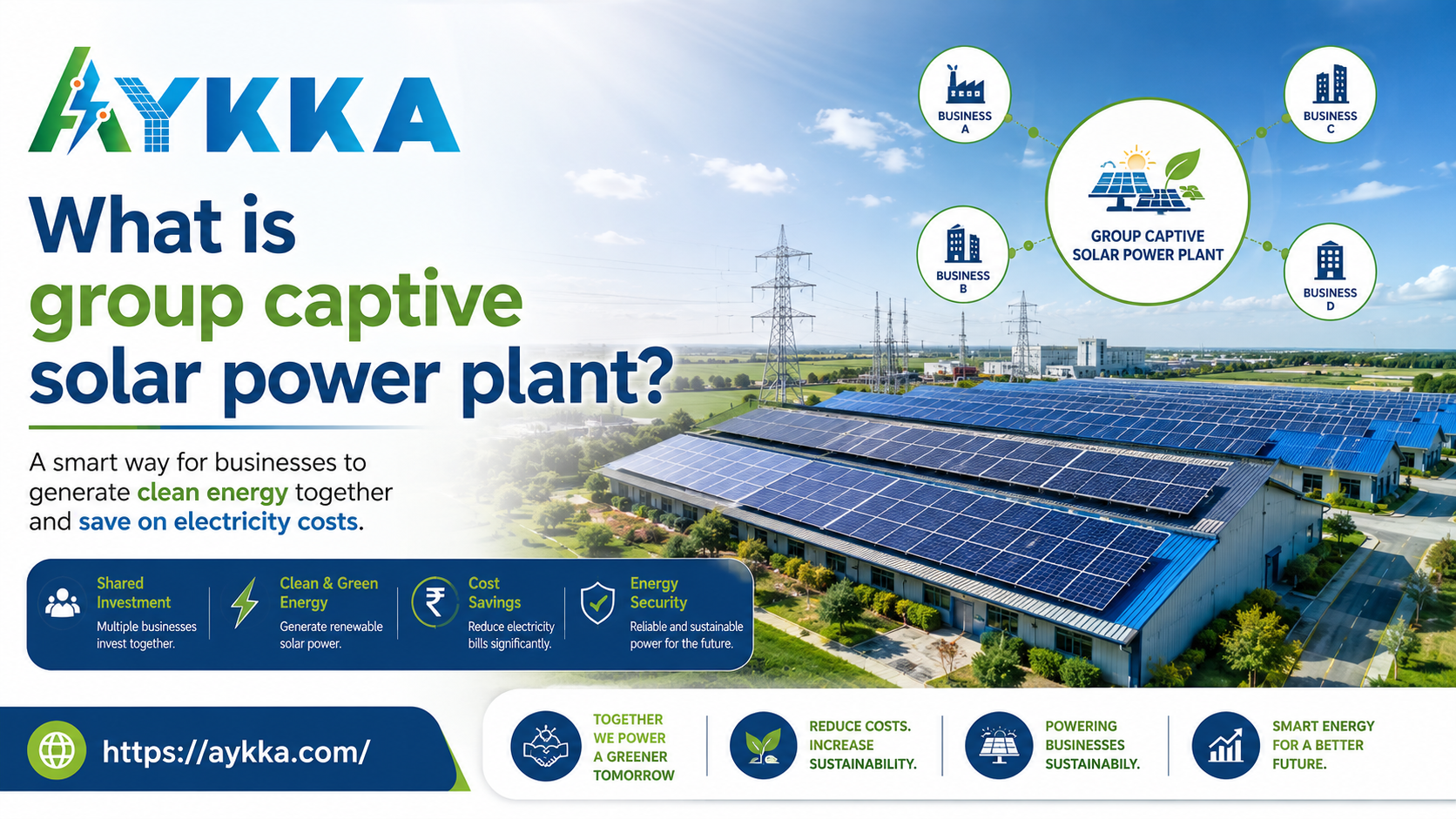
What is group captive solar power plant?

what is group captive solar power plant

If you run a manufacturing unit or another electricity-intensive business, you probably look at your power bill differently from the average consumer. Electricity is not something you use occasionally. It is part of the cost of producing, storing, processing or delivering whatever your business does.That is why solar has become more than a sustainability conversation for many companies. It is also an energy-cost conversation.The difficulty is that putting solar panels on the roof does not always solve the whole problem. A factory may have a large electricity requirement but very little unused roof area. In some cases, the available land is needed for production, warehouses, parking or future expansion.

This is one situation where a group captive solar power plant can be worth looking at.The basic idea is quite straightforward: what is group captive solar power plant in practice? Instead of one company building a large solar plant entirely on its own, a group of eligible electricity consumers participates in a common project. The consumers have an ownership interest in the project and use the electricity generated by it, subject to the applicable captive power regulations.The plant can be located away from the factories that consume its electricity.That one point explains much of the appeal of the model.

What Is Group Captive Solar Power Plant and How Does It Work?

It is a solar power project in which eligible electricity consumers collectively hold ownership in the generating project and consume the electricity produced by it for their own use.

The solar plant is usually developed at a location where a large project can be built with suitable land, solar resources and grid connectivity. The participating businesses do not have to install the entire generating capacity at their own premises.

That is an important distinction.

A business buying renewable electricity from a solar generator is not automatically participating in a captive project. In a captive structure, ownership and consumption are part of the arrangement.

A simple way to picture it is this:

Several businesses invest in one solar project → the project generates electricity → the participating businesses consume that electricity through the applicable grid arrangement.

It is essentially a shared solar asset designed around the electricity needs of its participating consumers.

Why Would a Company Need This Model?

Consider a typical industrial situation.

A company operates a factory that consumes a large amount of electricity every month. Management wants to increase its use of solar power, but there is a problem: the factory does not have enough suitable space to install a solar plant large enough to cover a meaningful part of its electricity requirement.

Building a separate solar farm elsewhere could solve the space problem, but doing that alone means taking on the entire project investment and responsibility.

A group captive arrangement offers another route.

The company can participate in a larger solar project along with other consumers. The plant can be located at a suitable site, while the electricity is delivered to the participating facilities through the electricity network under the relevant open-access arrangements.

For businesses with substantial power consumption, that can make the idea of off-site solar much more practical.

How Does the Captive Solar Project Work? 

There are several legal, financial, and technical details behind every project, but the basic flow is easier to understand than it first appears.

Businesses become participating consumers

The process starts with electricity consumers that want to participate in a common renewable energy project.

Their electricity consumption is important because the captive framework is not based on ownership alone. The amount of electricity consumed also matters.

An SPV generally owns the project

A Special Purpose Vehicle, or SPV, is commonly established for the project.

The SPV becomes the entity through which the solar plant is developed and owned. Participating consumers hold equity in it according to the project’s structure.

This is one of the main differences between a captive ownership structure and an ordinary power purchase agreement. 

The Plant Is Set Up at a Suitable Location

The project developer takes care of the practical side of developing the plant: land, engineering, solar modules, inverters, evacuation infrastructure, grid connectivity, construction and commissioning.

The location does not have to be next door to the consumer.

In fact, the ability to use a suitable off-site location is one of the reasons businesses consider this model.

Electricity is generated and transmitted

Once the plant is operational, solar energy is converted into electricity and injected into the grid.

The electricity then moves through the applicable transmission and distribution network to the participating consumers.

This involves the relevant approvals, metering, scheduling and open-access arrangements.

The participating consumers use the electricity

The businesses consume the power for their own operations.

At this stage, the question becomes less about the solar panels themselves and more about the economics of the electricity being delivered to the factory or facility.

That is ultimately what a business needs to evaluate.

What Makes a Solar Plant “Captive”?

This is where the model becomes different from simply buying green electricity.

India’s captive generating plant framework includes specific requirements relating to ownership and consumption. The Electricity Rules were amended in 2026, so project-specific ownership, consumption and compliance requirements should be verified under the rules applicable to the project. 

These two numbers are worth remembering because they explain why the ownership structure matters.

It is not enough for a business to say that it is using solar electricity. The project needs to meet the conditions prescribed for captive generation.

The rules also contain provisions concerning captive users, generating plants, SPVs and how ownership and consumption are assessed. The regulatory framework has been amended over time, so the exact requirements applicable to a new project should always be checked at the time of investment.

For a business considering the model, this means the regulatory side deserves the same attention as the financial side.

Where Does the Financial Advantage Come From?

This is probably the first question most business owners or finance teams will ask.

The answer is not simply “solar is cheaper.”

The economics depend on the complete structure of the project.

A business normally has an existing electricity cost. That cost may include energy charges and several other components depending on the connection, location and applicable tariff structure.

With this type of captive project, the business needs to understand what its renewable electricity will actually cost after considering the project investment and applicable charges. 

Depending on the project and state, the calculation may include:

  • Cost of the solar project
  • Financing cost
  • Operation and maintenance
  • Transmission charges
  • Wheeling charges
  • Banking-related charges, where applicable
  • Surcharges
  • Taxes
  • Grid and evacuation costs
  • Other statutory or project-specific charges

This is why comparing a quoted solar generation rate with the headline electricity tariff can be misleading.

The useful number is the effective delivered cost of electricity.

If that number is attractive compared with the business’s existing power cost, the project may make commercial sense.

If it is not, the fact that the electricity is solar does not automatically make it a good investment.

The Land Advantage Is Easy to Overlook

A factory’s land is valuable.

If a company owns a large industrial site, that land may already have a job. It might be occupied by production lines today or reserved for an expansion planned three years from now.

A solar installation competing with those requirements can become difficult to justify.

A remote solar project changes the equation.

The company can participate in a much larger solar installation without turning its own premises into a solar farm.

For businesses with high electricity consumption and limited available space, this can be a significant practical consideration.

Rooftop Solar and Off-Site Solar Projects: Key Differences

Both models use solar power, but they suit different circumstances.

Rooftop solar is physically connected to the consumer’s premises. It works particularly well when a business has a suitable roof, predictable daytime consumption and enough space for the required capacity.


Rooftop Solar

Off-Site Captive Solar 

Plant location

Consumer’s site

Usually off-site

Ownership

Usually individual

Shared among participating consumers

Scale

Limited by available site

Can be utility/megawatt scale

Large land requirement at factory

Yes, if ground-mounted

No

Power delivery

Mainly on-site

Through applicable grid arrangements

Investment

Individual project

Shared/project ownership

Typical consideration

Available roof/land

High demand and limited on-site space

This does not mean one model is better than the other.

A company with a large, suitable rooftop may have no reason to complicate things with an off-site project.

Another company may have a huge electricity requirement and almost no spare space. For that business, an off-site captive arrangement deserves a closer look. 

What About Open Access?

The terms captive generation and open access are often mentioned together, which can make the subject confusing. 

They are related, but they do not mean the same thing.

Open access refers to the use of the electricity network to access power from a source other than the conventional supply arrangement, subject to the applicable rules, approvals and charges.

Captive generation refers to the ownership and consumption structure of the generating plant.

An off-site captive project can use open-access arrangements to deliver electricity to its participating consumers.

So, one describes the ownership relationship, while the other describes the way electricity is accessed and transported through the network.

That distinction becomes important when a business compares different renewable power options.

Who Should Consider This Solar Model? 

There is no magic electricity-consumption number that makes a company automatically suitable.

However, the model is generally more relevant to businesses that use substantial amounts of electricity and expect that requirement to continue over the long term.

This can include:

  • Manufacturing plants
  • Textile units
  • Engineering companies
  • Automobile and component manufacturers
  • Chemical and processing industries
  • Large warehouses
  • Commercial facilities
  • Hospitals
  • Educational institutions
  • Corporate facilities
  • Other high-consumption businesses

The actual suitability depends on the consumer’s location, electricity profile, tariff, project structure, applicable regulations and financial objectives.

A small office with modest electricity consumption may not need this level of complexity.

A factory operating energy-intensive machinery for long hours is a very different case.

What Are the Risks or Challenges?

A good business decision should look at the inconvenient parts as well as the attractive ones.

The first is regulatory compliance.

The project has to satisfy the applicable captive ownership and consumption requirements. These cannot simply be assumed to remain unchanged throughout the life of the project.

Then there is the electricity network.

The solar plant may be hundreds of kilometres away from the factory. The electricity still has to travel through the grid, which means connectivity, transmission, wheeling, metering and scheduling all matter.

Solar generation itself is also variable.

A plant does not produce exactly the same amount of electricity every day. Weather, season and solar conditions influence output.

There is also the question of multiple participants.

When several companies share ownership of a project, the agreements between the parties become important. A prospective participant should understand its investment commitment, consumption expectations, responsibilities, exit provisions and what happens if its electricity requirement changes.

None of these issues makes this renewable energy model unattractive.

They simply mean that it should be treated as a long-term energy investment rather than a straightforward equipment purchase.

What Should a Business Check Before Investing?

Before signing up for a group captive project, a company should start with its own electricity data.

Look at the previous electricity bills. Understand annual consumption, monthly variations, peak demand and production patterns.

Then calculate the current effective cost of electricity.

After that, compare it with the proposed renewable arrangement.

A few practical questions are worth asking:

1. How much electricity will the project actually generate?

The expected annual generation is more useful than simply knowing the plant’s installed capacity.

2. What will the delivered cost be?

Include the applicable transmission, wheeling, banking, surcharge, tax and other costs.

3. What ownership will the company hold?

The business should clearly understand its equity position and how it relates to the captive requirements.

4. What happens if consumption falls?

A factory may have an unexpected shutdown or a production slowdown. The implications should be understood beforehand.

5. Who is responsible for operations and maintenance?

A solar project is intended to operate for many years. Long-term performance depends on more than the initial installation.

6. What happens if regulations change?

Electricity policy is not static. The commercial model should be evaluated with appropriate regulatory diligence.

Is This Captive Solar Model Worth Considering? 

For the right business, yes.

But “right business” is the important part.

This model is not automatically the cheapest renewable option for every company. Nor is it automatically better than rooftop solar or another open-access arrangement.

It becomes particularly interesting when three things come together:

The business consumes a lot of electricity.

The business cannot install enough solar at its own premises.

The business is prepared to make a longer-term commitment to renewable power.

When those conditions exist, an off-site solar project can solve a problem that rooftop solar cannot.

The next step should then be a proper commercial assessment rather than a decision based on a headline savings percentage.

Conclusion

The easiest way to understand group captive solar is to stop thinking of it simply as “buying solar power.” It is a different way of structuring renewable energy procurement.

A group of businesses participates in a solar generating project, takes the required ownership interest, and uses the electricity produced by that project. The plant can be developed at a location that is more suitable for large-scale solar, while the participating businesses receive the electricity through the applicable grid arrangements. For a company with high power consumption, that can be an interesting alternative to relying entirely on conventional electricity or trying to fit a very large solar installation onto its own premises. But the numbers need to make sense.

The right decision comes from looking at the company’s actual consumption, current power cost, proposed project economics, ownership structure and regulatory requirements together. Businesses exploring this model can learn more about AYKKA Technovision Private Limited, which is designed around large-scale solar generation and an SPV-based ownership structure for participating consumers. Visit Aykka to learn more about group captive solar solutions.

Frequently Asked Questions

What Is the Difference Between Group Captive and Open Access?

Group captive involves shared ownership of a power project, while open access allows eligible consumers to buy electricity from a power producer through the grid.

The top 5 solar power plants in India include Bhadla Solar Park, Pavagada Solar Park, Kurnool Ultra Mega Solar Park, Rewa Ultra Mega Solar Park, and Khavda Renewable Energy Park

The 20% solar rule generally refers to a guideline requiring a certain share, often around 20% of a consumer’s electricity consumption or contracted load to be met through solar power, depending on the applicable policy or project structure.

Yes, a 3kW solar system can run a 1.5-ton AC, especially during sunny hours, but actual performance depends on the AC’s power consumption and other connected loads.

Combined-cycle gas power plants are generally among the most efficient conventional power plants, while solar and wind plants have no fuel-related thermal efficiency.

Read More

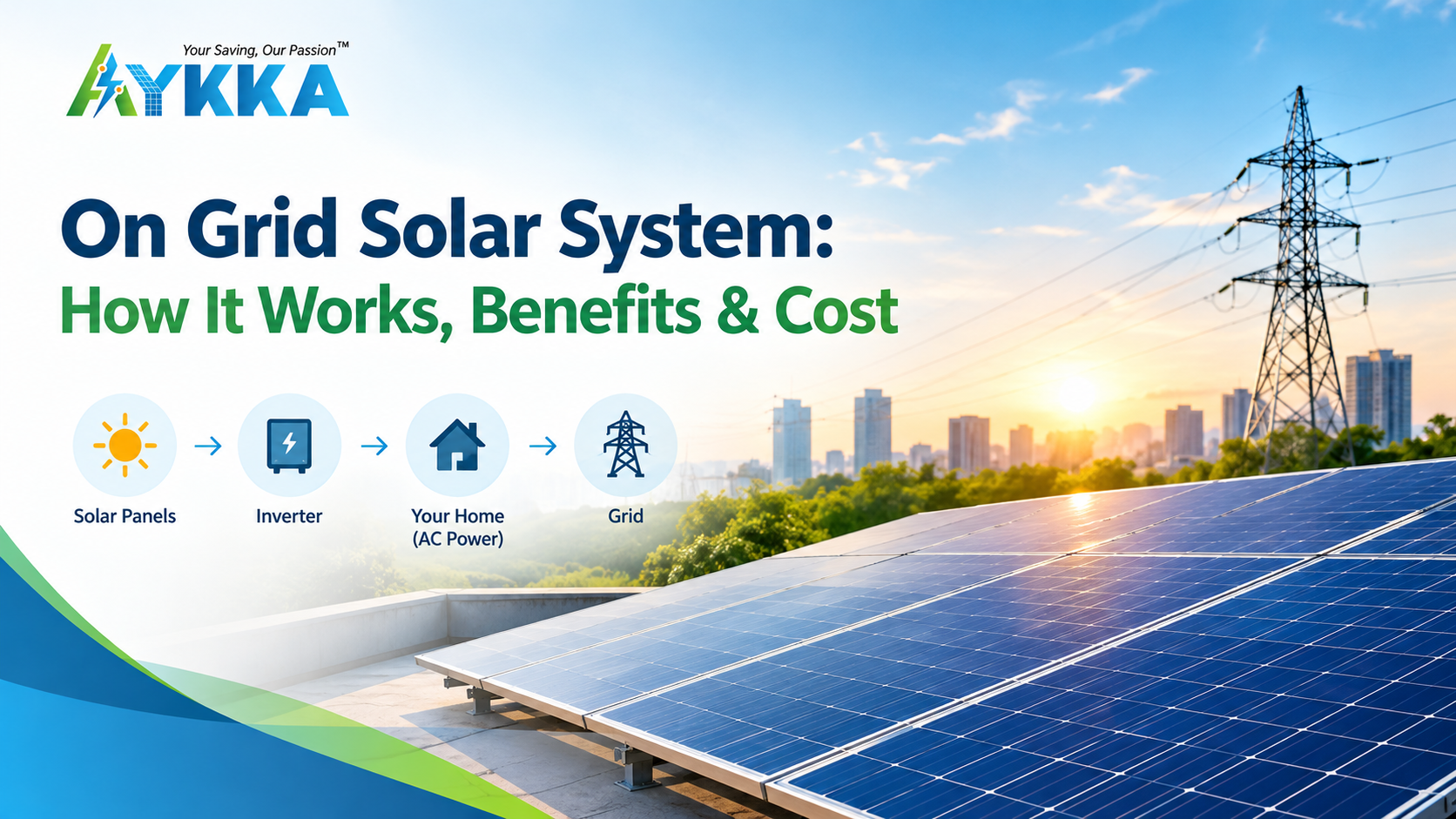
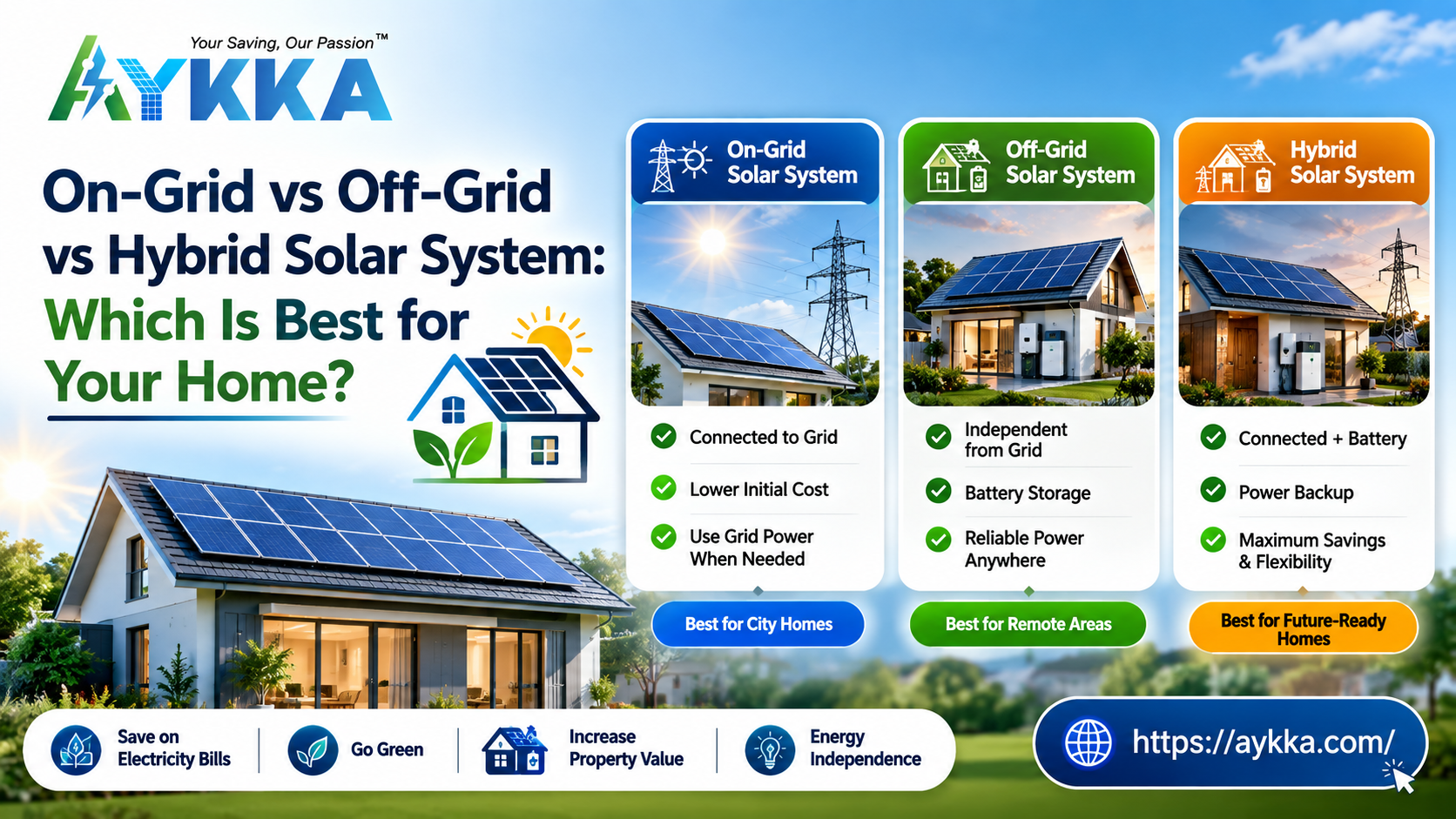
On-Grid vs Off-Grid vs Hybrid Solar System: Which Is Best for Your Home?

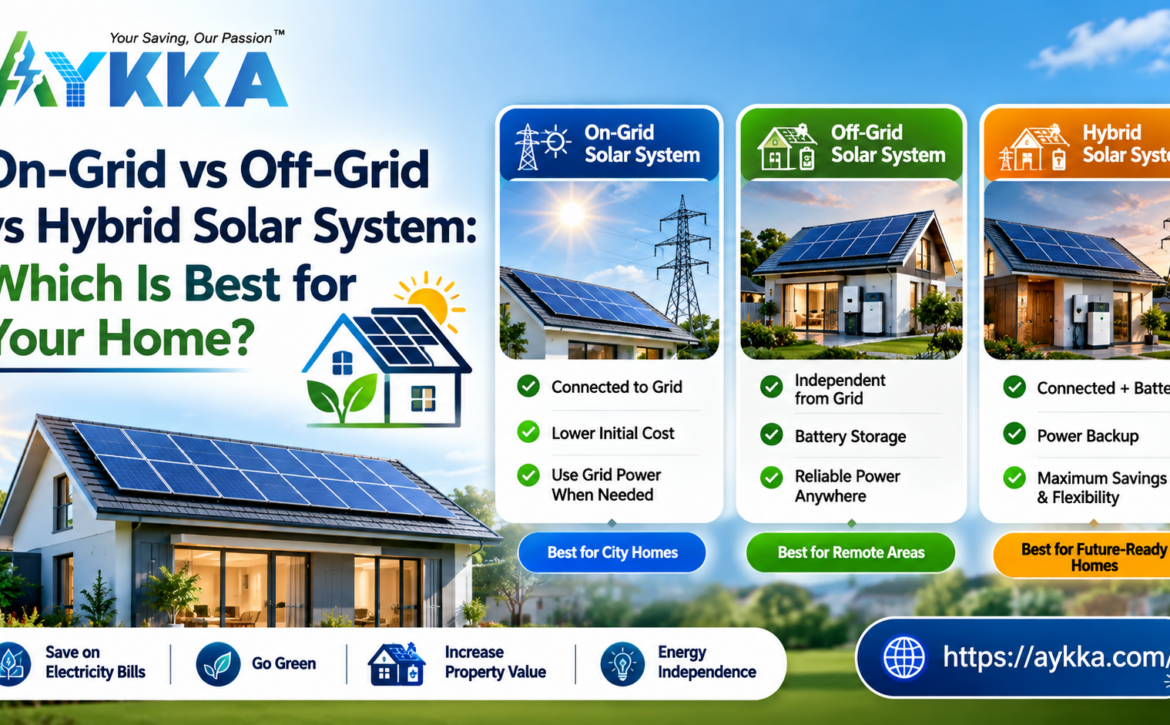
On-Grid vs Off-Grid vs Hybrid Solar System

Choosing the right solar setup for your home often comes down to one key decision: on-grid vs off-grid vs hybrid solar system. They all generate electricity via solar panels, but when the panel’s production exceeds demand, they mix power grid dependence with battery storage and backup in case of a power cut. An on-grid system utilizes the utility grid to save money on a utility bill, an off-grid system runs independently with battery storage, and a hybrid system is a combination of solar, batteries, and grid electricity. Understanding these differences can help you choose a system that fits your electricity needs, budget, and expectations for backup and energy independence.

What Is an On-Grid Solar System?

An on-grid solar system, sometimes called grid-tied, stays permanently connected to the public electricity grid. There’s typically no battery. Your home draws from whichever source makes sense: solar when available, grid power when it isn’t.

The hardware is minimal:

  • Solar panels generate DC electricity from sunlight
  • A grid-tie inverter converts that DC power into usable AC
  • The grid stays connected, both as backup and as an outlet for surplus power

During daylight hours, your home runs on solar first. Whatever you don’t use gets pushed back onto the grid, and some utilities credit you for it through net metering, depending on where you live. Once the sun stops producing enough, the switch to grid power happens without you noticing.

So what’s an on-grid system good for? Mostly, people with dependable grid access whose real goal is a lower bill, not backup power. These systems also shut down automatically when the grid goes down, a safety measure for utility crews. If the power goes out, your solar goes dark too, even in full sun.

See What Is an On-Grid Solar System? for more on inverter specs and net metering.

What Is an Off Grid Solar System?

An off-grid solar system runs entirely independent of the utility grid, with no fallback. It needs more equipment:

  • Solar panels to generate electricity
  • A battery bank to store what isn’t used immediately
  • A charge controller to manage power flowing into those batteries
  • An off-grid inverter to turn stored battery power into usable AC

The battery bank is the heart of the system. During the day, panels charge the batteries while powering the house. At night, or through cloudy weather, the home runs on what’s stored. If batteries drain faster than the sun refills them, there’s no grid to bail you out, which is why these systems tend to be oversized relative to daily use, and why people living with them stay disciplined about consumption.

This setup usually suits rural homeowners where running grid lines is expensive or impossible, along with anyone who wants energy independence on principle.

See What Is an Off-Grid Solar System? for more.

On-Grid vs Off-Grid Solar System:Key Differences

Side by side, it comes down to one question: does the system rely on the utility grid, or stand on its own?

Feature

On-Grid

Off-Grid

Grid connection

Always connected

Not connected

Battery requirement

Not required

Required

Backup during outage

No, shuts off for safety

Yes, from batteries

Excess electricity

Exported (where net metering applies)

Stored or unused

Dependence on grid

High

None

Installation

Simpler

More involved, needs battery sizing

Best suited for

Stable grid, focused on lower bills

Remote homes, prioritizing independence

The short version: on-grid leans on the grid to cut costs, while off-grid removes it entirely, at the cost of a bigger upfront investment and more hands-on management.

See On-Grid vs Off-Grid Solar System for a deeper comparison.

What Is a Hybrid Solar System?

A hybrid solar system is the middle ground: generation, storage, and a grid connection, working together.

Panels power the home first, then top up the battery. Once it’s full, leftover power can go back to the grid, depending on local rules. The battery cushions outages, while the grid backstops whenever solar and storage both fall short.

The upside is outage protection a plain on-grid system doesn’t offer, plus bill savings from staying grid-connected. The trade-off is cost and complexity, with more moving parts to size and configure. It suits homeowners who want savings and outage protection without going fully off-grid.

More on battery sizing and outage planning in What Is a Hybrid Solar System?

On-Grid vs Off-Grid vs Hybrid: Key Differences

Feature

On-Grid

Off-Grid

Hybrid

Grid connection

Yes

No

Yes

Battery

Not included

Required

Included

Backup power

No

Yes

Yes

Initial investment

Lowest

Highest

Moderate to high

Independence

Low

Complete

Partial

Maintenance

Low

Moderate to high

Moderate

Ideal for

Stable grid areas

No grid access

Savings plus backup

Long-term outlook

Tied to grid stability

Independence, periodic battery replacement

A balance of both

No single row decides anything on its own. Usually it’s a combination of factors that points you toward one system.

Which Solar System Is Best for Your Home?

There isn’t a universal answer. What shapes the decision is grid reliability, electricity use, whether backup matters, budget once batteries are factored in, roof space, and maintenance.

As a rough starting point:

  • Go on-grid if the main goal is a smaller bill and your local grid is generally dependable.
  • Look at off-grid if grid access is unreliable, unavailable, or not worth connecting, and independence matters to you.
  • Consider hybrid if you want savings and some backup power without going fully off-grid.

These are starting points, not guarantees. Savings and performance vary by usage, climate, equipment, and local rules.

Pros and Cons

On-grid costs less and is simplest to install, and where net metering is offered, it can lower your bill meaningfully. The catch: no power during outages.

Off-grid provides total independence with no need for grid-based availability. That price: the biggest initial expense, disciplined routines, batteries in regular need of care and servicing.

Hybrid brings backup power plus a shot at real savings, drawing from either the battery or the grid. What you give up is cost and simplicity.

Conclusion

None of these three systems beats the others on paper, it comes down to what your home needs. A dependable grid and a goal of lowering your bill points toward on-grid. Barely-there grid access, or wanting independence badly enough that price stops mattering, that’s off-grid territory. For people in between, hybrids usually end up being the pick.

Sort out your grid situation, budget, and how much backup matters before installing, and you’ll avoid paying for capacity you’ll never touch, or getting stuck without backup when you need it most. Choosing between on-grid, off-grid, and hybrid solar ultimately depends on your home’s specific requirements. With the right assessment and system design, Aykka Technovision Pvt Ltd helps homeowners choose solar solutions that balance energy savings, reliability, and long-term value.


Frequently Asked Questions

Is on-grid or off-grid solar cheaper?

On-grid is cheaper upfront since there’s no battery bank to buy. Off-grid costs more since it needs enough storage and panel capacity to cover your home alone.

No. It shuts down automatically when the grid goes out, as a safety measure for utility workers.

Often, yes, though it depends on your inverter and whether it supports battery integration.

No. Policies vary by utility and region, and some areas don’t offer it at all. Check with your local utility first.

Off-grid is usually the practical choice when grid lines are expensive or impossible to run. Hybrid can work too if some grid access is worth keeping as backup.

Read More

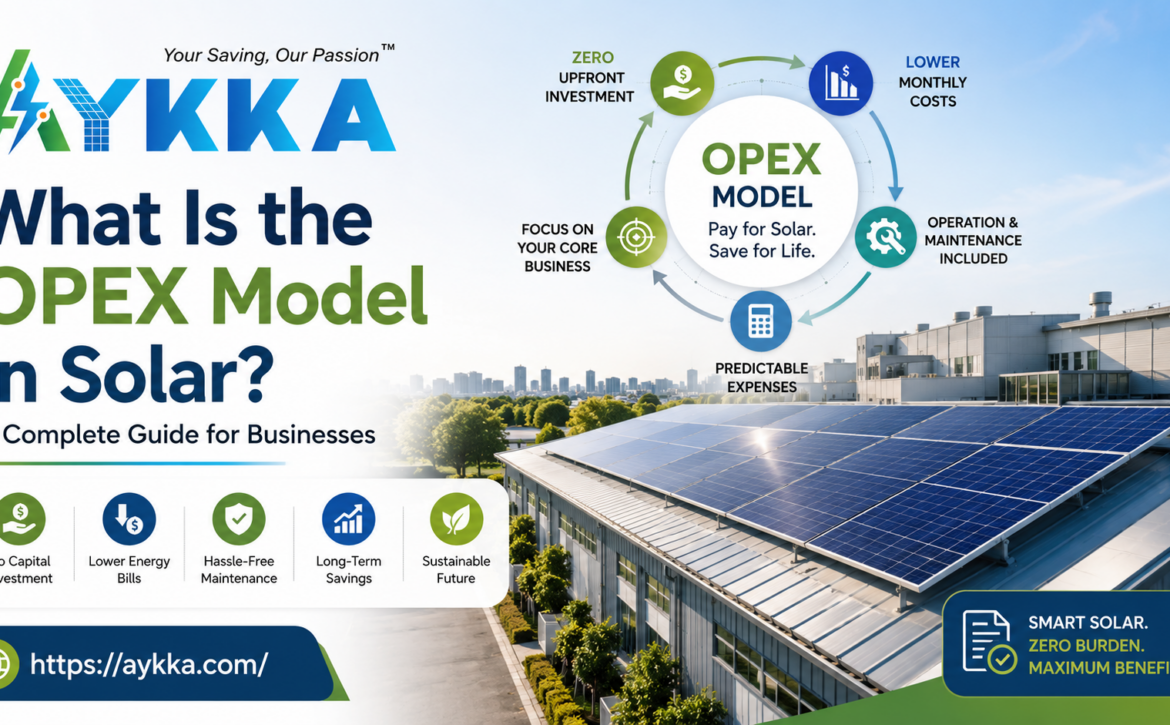
What Is the OPEX Model in Solar? A Complete Guide for Businesses

opex model in solar

The opex model in solar is a financing and operating approach that allows businesses to use solar power without purchasing the solar system upfront. Under this model, a third-party provider typically invests in, owns, and maintains the solar installation, while the business pays for the electricity generated or through a fixed recurring charge. This reduces the need for a large initial capital investment and can make solar adoption easier for businesses with limited capital budgets. However, the OPEX model also involves long-term contractual commitments, payment terms, ownership conditions, and performance responsibilities that businesses need to evaluate carefully. This guide explains how the OPEX solar model works, its benefits and limitations, and the key factors businesses should consider before choosing it.

What Is an OPEX Solar Model?

OPEX solar model is when a business pays for solar power as a recurring cost, the same way it pays a utility bill, instead of buying a solar system outright. The provider owns and usually maintains the equipment. The business just pays for what it uses, or for access to it, under a contract.

To make sense of that, it helps to pull apart two words that get thrown around loosely OPEX and CAPEX.

CAPEX is capital expenditure. That’s the upfront money spent to buy something the business will own, like a rooftop solar array sitting on the balance sheet as an asset from day one. OPEX is operating expenditure, the ongoing cost of running the business, the same bucket that covers rent, electricity, or leased equipment. Under a solar opex model, the solar system typically doesn’t belong to the business at all. The cost just shows up as a recurring line item instead of a capital purchase.

Why would a company choose this over ownership? Usually it comes down to not wanting cash locked into hardware, or not wanting to deal with the technical side of running a power system in-house. Ownership in this setup normally sits with the solar provider or a third-party financier though who owns what, exactly, depends on the contract in front of you. That part isn’t standard across the industry. 

How Does the OPEX Model Work for Businesses?

The process tends to follow a similar shape from provider to provider, even if the details shift around.

It starts with a site assessment. Someone comes out, looks at the roof or available land, checks the shading, the structure, and how much power the business actually uses day to day. Not every site works for solar, so this step matters more than people expect.

From there, the provider designs a system sized to that specific site and load. A cold storage warehouse running equipment around the clock needs a different setup than an office that’s mostly empty after 6 PM.

Installation comes next, and in most OPEX arrangements, the business isn’t paying for this out of pocket. Once the system’s physically in place, both sides sign an agreement. This is really the document that defines everything: payment terms, how long the contract runs, who fixes what if something breaks. It’s worth reading slowly.

After that, the system just runs. It generates electricity, offsets some portion of grid consumption, and the business pays according to whatever the contract says, sometimes based on how much power was generated, sometimes a flat recurring fee. Maintenance and monitoring usually fall to the provider during this stretch, though again, that’s a contract detail and not a universal rule.

Eventually the contract term ends, and what happens next renewal, removal, some kind of transfer option depends entirely on what was agreed at the start. This is easy to overlook when you’re three years into a ten-year deal and haven’t thought about year eleven.

OPEX vs CAPEX Solar: What Is the Difference?

Factor

OPEX Model

CAPEX Model

Upfront investment

Minimal or none for the system itself

Full cost paid upfront (or financed via loan)

System ownership

Usually stays with the provider or financier

Owned by the business from installation

Maintenance

Generally the provider’s responsibility

Usually falls on the business, directly or via a separate contract

Payment structure

Recurring usage-based or fixed periodic payments

One-time purchase cost

Cash-flow impact

Spreads out over the contract term

Larger cash outflow up front

Financial responsibility

Shared, per contract terms

Sits mostly with the business

Long-term considerations

Fixed contract period; ownership terms vary by deal

Full ownership and control, but full responsibility too

Treat this table as a general pattern rather than a rulebook actual terms shift depending on the provider and the deal you negotiate.Businesses evaluating a solar project often need to decide whether to purchase the system or use a third-party financing arrangement. The choice affects upfront investment, ownership, maintenance, and long-term cash flow. To understand these two approaches in detail, read our guide to OPEX vs CAPEX solar models. 

What Does a Business Pay Under an OPEX Arrangement?

There’s no single format here. It really comes down to how the provider structures the offer and what gets negotiated.

Providers running an opex model solar program will usually set the specifics in writing rather than leaving them open-ended. A few structures show up often:

  • Payment tied to actual energy generated or consumed similar in spirit to a power purchase agreement (PPA)
  • A fixed recurring fee, paid regardless of exact output, for use of the system
  • Rates that are fixed for the life of the contract, or that include escalation clauses over time
  • PPA-style setups, where the payment is directly linked to how much solar electricity was used

Maintenance is typically folded into the deal rather than billed separately, but don’t just assume that to confirm it. Same goes for contract length and how payments might change over time. None of this is standardized industry-wide, so the specific agreement in front of you is really the only source of truth.

Benefits of the OPEX Model for Businesses

A few things tend to draw companies toward this structure:

Lower upfront cost is the obvious one capital that would’ve gone into buying panels and inverters can go toward equipment, hiring, or whatever else the business needs. Cash flow tends to be easier to plan around too, since it’s a recurring payment rather than one large hit.

There’s also the appeal of getting solar power on-site without taking on the responsibilities of owning a power-generation asset, no need to build in-house expertise for something that isn’t really the company’s core business. Depending on how the contract is written, payments can end up more predictable than a grid tariff that moves around on its own.

Maintenance and performance monitoring, when included, mean fewer surprises. Someone else is watching the system and catching issues before they become expensive ones.

None of this guarantees a specific financial outcome for every business. How much value shows up depends on your actual electricity usage, your site, how well the system performs, and the terms you signed. It’s a structure with real advantages, not a formula with a fixed result.

What Are the Limitations of an OPEX Solar Model?

It’s not all upside, and it shouldn’t be presented that way.

The contract commitment is real; these agreements usually run for years, and businesses need to be genuinely comfortable with that timeline before signing, not just optimistic about it. There’s also provider dependency: since the provider owns and often maintains the system, your solar experience is only as good as their service quality.

Some agreements place restrictions on what you can do with your own roof or site while the contract is active. Ownership sits elsewhere too, which means the system doesn’t show up as a business asset that might matter for how you plan your books.

Pricing isn’t always flat for the whole term. Escalation clauses exist in some contracts, so it’s worth knowing exactly how costs could move over the years, not just what year one looks like. Exiting early can also come with costs or conditions that aren’t obvious on a first read.

And performance, who’s on the hook if the system underdelivers due to weather or equipment issues needs to be spelled out clearly, not left as an assumption. Given how much variation exists between providers, having someone review the contract carefully before signing isn’t optional, it’s just sensible.

Who Should Consider an OPEX Solar Model?

This structure tends to get the most attention from businesses with heavy, fairly consistent electricity use because that’s where on-site generation actually offsets something meaningful. Think manufacturing units running equipment through the day, warehouses and distribution centers with large open roofs, offices trying to manage costs without spending capital, retail spaces with predictable hours, hotels running continuous loads, schools and institutional campuses, and other commercial buildings with roof or land space to spare.

That said, fitting into one of these categories doesn’t automatically mean a solar opex model is the right call. Site conditions, current energy spend, and what the business actually wants long-term all factor into whether this arrangement makes sense.

Practical Example of an OPEX Solar Arrangement

Here’s a hypothetical to make this more concrete.

Say a mid-sized manufacturing facility has a large flat roof and burns through a lot of electricity during the day machines running, lights on, standard factory stuff. The business likes the idea of solar but doesn’t want to spend the capital on installing a system right now.Under a hypothetical OPEX deal, a provider assesses the roof, designs a system around the facility’s typical daytime load, and installs it at their own cost. They’d likely hold onto ownership of the system for the length of the contract.

Before signing anything, this business would want to check the proposed rate against its current grid tariff, look closely at the contract length and any escalation terms, nail down exactly who handles maintenance, and understand what happens if the roof needs repairs mid-contract or if they want out early.Again this is illustrative only. Real terms, ownership, and pricing vary by provider and by the specific deal.

What Should Businesses Check Before Choosing an OPEX Solar Model?

Before signing, it’s worth going through this list rather than trusting a summary pitch:

  • Contract duration, and what renewal actually looks like
  • How payment is structured usage-based, fixed, or some other formula
  • How energy pricing is set, and whether it’s fixed or subject to change
  • Whether the proposed system capacity actually matches your consumption
  • What generation output is realistically expected given your site
  • How performance guarantees are defined, and what happens if they’re not met
  • Who’s responsible for maintenance, cleaning, and repairs
  • Who insures the system, and what happens if it’s damaged
  • Who owns the system, both during and after the contract
  • What visibility you’ll actually have into system performance
  • What early termination costs or conditions look like
  • Who’s responsible for roof or site issues that come up
  • What happens at the end of the contract removal, renewal, or transfer

Going through this with both finance and operations in the room tends to surface questions people miss when they’re just looking at the headline payment number.

Is an OPEX Solar Model Right for Your Business?

There’s no universal answer here deciding whether an opex model solar setup fits a business depends on how it weighs capital availability against long-term control.

If avoiding a large upfront cost matters more than owning the equipment, or if predictable operating expenses fit better into how the business budgets, OPEX is worth a serious look. 

Conclusion

There’s no single right answer between OPEX and CAPEX for solar. It comes down to matching the structure to your capital position, your energy use, and where the business is headed. The opex model in solar can take pressure off upfront costs and shift maintenance to someone else, but it also means committing to contract terms that deserve a real look before you sign, not just a skim. Whatever route a business is leaning toward, the terms payment structure, ownership, contract length matter more than which label gets attached to the deal. Aykka Technovision Private Limited works with businesses figuring out these solar decisions, and the practical advice doesn’t really change from provider to provider: read the contract properly, know what you’re actually paying for, and pick the structure that fits how your business plans to grow, not just what looks cheapest on day one.

Frequently Asked Questions

What does OPEX mean in solar?

OPEX stands for operating expenditure. In solar, it means paying for power or system access as a recurring cost rather than buying the system outright as a capital asset.

In most cases, the provider or a financing partner owns the system for the length of the contract. This isn’t universal, though ownership structures differ between providers, so it’s something to confirm directly rather than assume.

Usually not separately, most OPEX contracts fold maintenance into the deal. But the scope of what’s covered isn’t consistent across providers, so it’s worth getting that in writing before you sign.

Payment structure, contract length, maintenance responsibilities, performance terms, ownership, and early termination conditions are the big ones. A careful review with finance and legal involved tends to catch things a quick read misses.

Read More

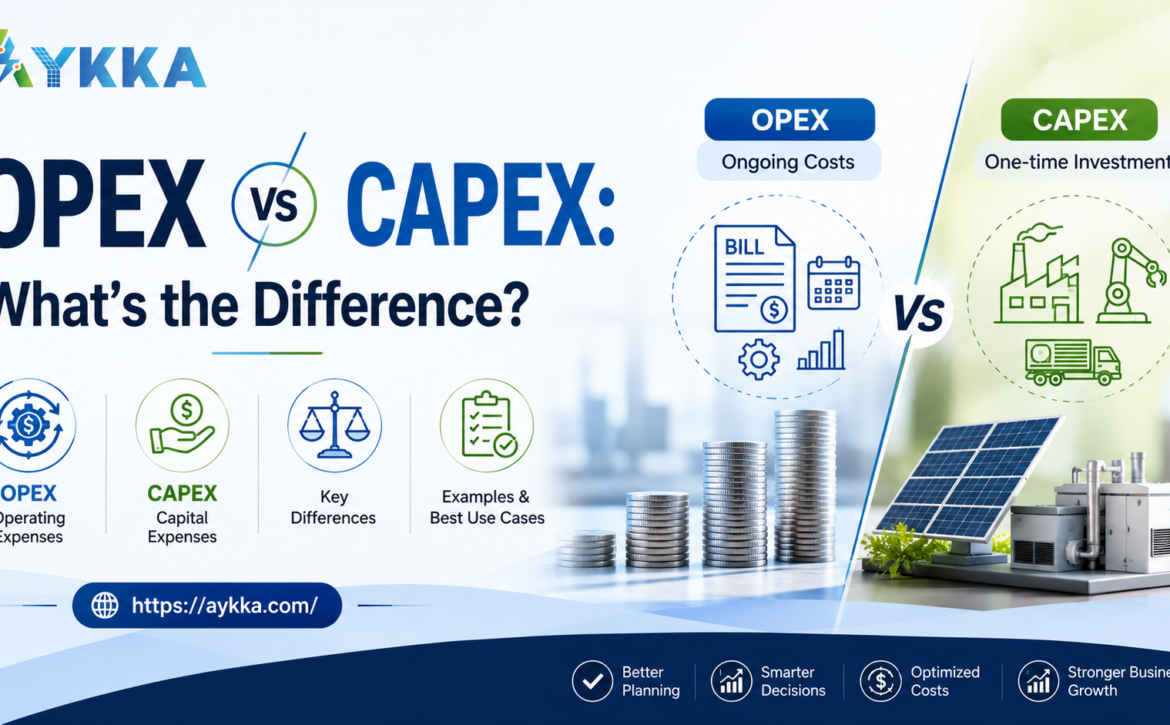
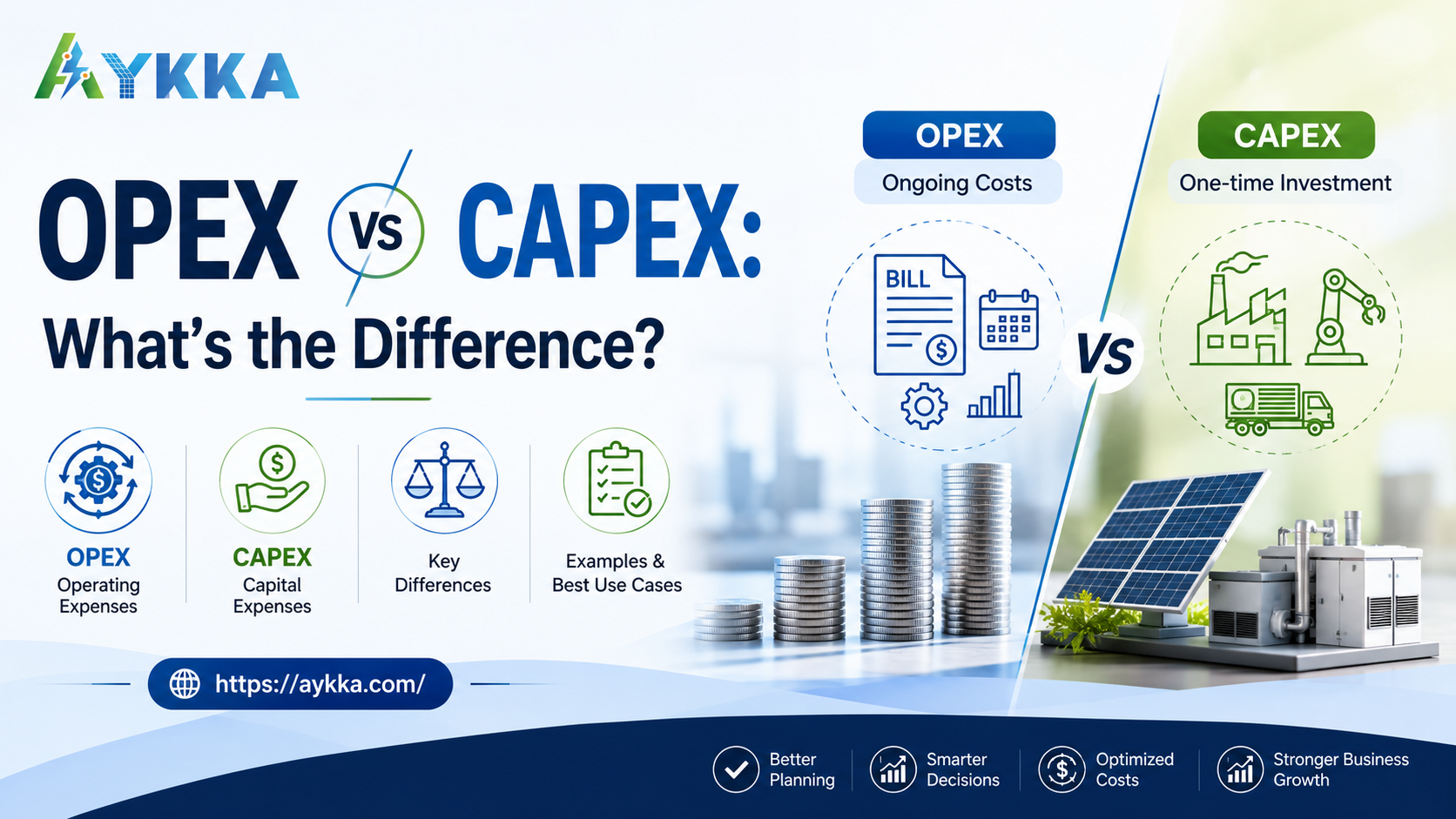
OPEX vs CAPEX: What’s the Difference? A Complete Guide for Businesses

OPEX vs CAPEX

Most businesses face the OPEX vs CAPEX question when planning a major investment. Consider a manufacturing company looking to reduce its electricity costs through solar energy. It can either purchase the solar system outright and own it or pay for the electricity through recurring payments without making a large upfront investment.

Neither option is inherently better. Each affects cash flow, ownership, accounting treatment and maintenance responsibilities differently. CAPEX, or capital expenditure, refers to money invested in a long-term asset that the business owns and uses for several years. OPEX, or operating expenditure, covers recurring expenses associated with running the business. In solar projects, the choice usually comes down to owning the system or using solar power through an arrangement managed by a third-party provider..

What Is the CAPEX Model?

Here, the business pays for the solar system itself and keeps it. No third party involved.

That means the company covers the panels, the inverter, the mounting structure, installation, and whatever else the project needs. Once everything’s installed, the system starts producing electricity for the business.

The upside is control. The company picks its own equipment, its own contractor, decides on the design, chooses who handles maintenance. Every unit of power the system generates goes straight to benefiting the business.

The tradeoff is that someone has to pay for all of it upfront, and the business is on the hook for maintenance, insurance, monitoring, and performance unless it hands those off to someone else.

Example of the CAPEX Model in Solar

Take a manufacturing company putting a rooftop solar system on its own building. It writes the check for the whole project and, from day one, the system is theirs. Less power gets pulled from the grid every month after that, and the setup shows up on the balance sheet as a long-term asset the company holds onto.

This setup tends to fit companies that have capital to spend, energy needs that don’t swing much, and no plans to leave the property anytime soon.

What Is the OPEX Model?

No purchase happens here. The business pays to use the asset, and whoever supplies it, typically the provider, is the one who owns and operates it.

For a solar project, that means a third party finances, installs, and maintains the system at the company’s site. The business doesn’t put money down for the installation. It just pays for the electricity it draws, under a long-term deal known as a Power Purchase Agreement, or PPA.

Example of the OPEX Model in Solar

Say a company would love a lower power bill but just can’t justify a big solar spend at the moment. That’s where a provider steps in, sets the whole system up at the company’s site, and handles the upkeep from there on. The company’s only real cost is the electricity it draws, billed at a rate the two sides settled on ahead of time.

This route suits businesses that want to keep their cash free for other things and would rather not deal with maintenance at all. Before signing on though, it’s worth checking the contract length, the tariff, payment terms, any performance guarantees, and how ownership and exit clauses are handled.

OPEX vs CAPEX: Key Differences, Benefits and Limitations

Boiled down, CAPEX is the capital spent to buy and own a long-term asset, while OPEX is the operating cost paid again and again just to use one. That one difference ripples through almost everything else.

Money upfront is the clearest split. CAPEX usually demands a large payment before anything even gets switched on. OPEX asks for little to nothing at the start, since the cost gets spread across the contract instead. Ownership follows the same logic. Buy under CAPEX and the business holds the asset. Go with OPEX and it’s the provider who typically keeps title to it, while the business just pays to use what’s there.

The way each shows up in the books differs too. A CAPEX purchase gets booked as a long-term asset and depreciates over the years. OPEX payments tend to sit as regular operating expenses instead, though the exact treatment can shift depending on the accounting standard in play. Maintenance follows ownership in a similar way: buy the asset and the business is the one fixing, replacing, and monitoring it, unless that gets handed off separately. Lease it under OPEX and the provider usually takes care of all that upkeep and monitoring on its own.

Control tends to sit with whoever owns the equipment. A business that owns its system gets to make the calls on upgrades and operations. Under OPEX, some of that control shifts to the provider, or ends up shared between the two. Cash flow tells a similar story from the other direction: CAPEX takes a real hit upfront, while OPEX spreads the cost out and keeps more cash free along the way. Over the long run, CAPEX can actually work out cheaper once the initial spend is paid off, whereas OPEX’s total cost hinges more on how the contract, tariff, and payment terms are structured.

CAPEX vs OPEX: Which Model Adds More Value?

If the priority is getting solar running without a big check upfront, OPEX model solar makes more sense.

Go the CAPEX route and the company funds the project itself, keeping the system as its own asset. That gives it a say over equipment choices, maintenance schedules, how performance gets tracked, and how future energy needs get planned. Companies with money on hand, fairly stable power demand, and no plans to relocate tend to do well with this.

Go the OPEX route and it’s usually the solar developer footing the bill, owning and running the system. The business just buys the power it uses, at a rate locked in through a PPA. That takes the pressure off working capital and makes solar a lot easier to adopt for companies that would rather have predictable bills than take on an asset.

So really, CAPEX model solar is for businesses chasing ownership and control, OPEX is for businesses chasing lower upfront cost and less hassle. Which one actually works out better depends on things like available capital, how much power gets used, who owns the site, financing costs, contract terms, and how far ahead the business is planning.

Type of Investment: CAPEX vs OPEX

CAPEX is straightforward capital investment. The business pays upfront, buys the system, and owns a long-term asset that keeps paying it back in electricity for years.

OPEX isn’t really an investment in the asset at all. The business usually doesn’t own the system, a developer does, and the company just pays for the power that comes out of it based on an agreed rate.

CAPEX is about owning something. OPEX is about using something. One suits businesses after long-term ownership, the other suits businesses that want solar without a big upfront cost and would rather have steady, predictable bills instead.

Conclusion

Sorting out OPEX vs CAPEX matters before committing to a commercial solar project. With CAPEX, the business pays upfront, owns the plant, and keeps the benefit of the electricity it generates going forward. With OPEX, the business pays recurring charges for solar power and usually never owns the equipment. CAPEX tends to work for companies with capital available, long-term plans for the site, and a need for full control. An OPEX arrangement tends to work better for businesses trying to protect their cash flow, avoid maintenance responsibilities, and still get onto solar through payments they can predict. Figuring out which one fits comes down to cash flow, power consumption, financing costs, contract terms, and how far out the business is planning. Aykka Technovision Private Limited can help walk through which model actually fits a given site and energy profile.

FAQs

What is the Main Difference Between OPEX and CAPEX?

OPEX is the ongoing cost of doing business . CAPEX is the purchase of assets that will serve the business over many years.

The business pays for the entire solar installation, and owns the system once the project is complete.

The company purchases solar energy and pays regularly . The system typically remains owned by the solar provider.

OPEX is generally easier on working capital as the business does not have to pay out a large sum at the beginning

CAPEX involves a larger initial investment as the business will have to pay for equipment and installation.The business owns the solar panels, inverters and other equipment that’s installed on its premises.

Read More

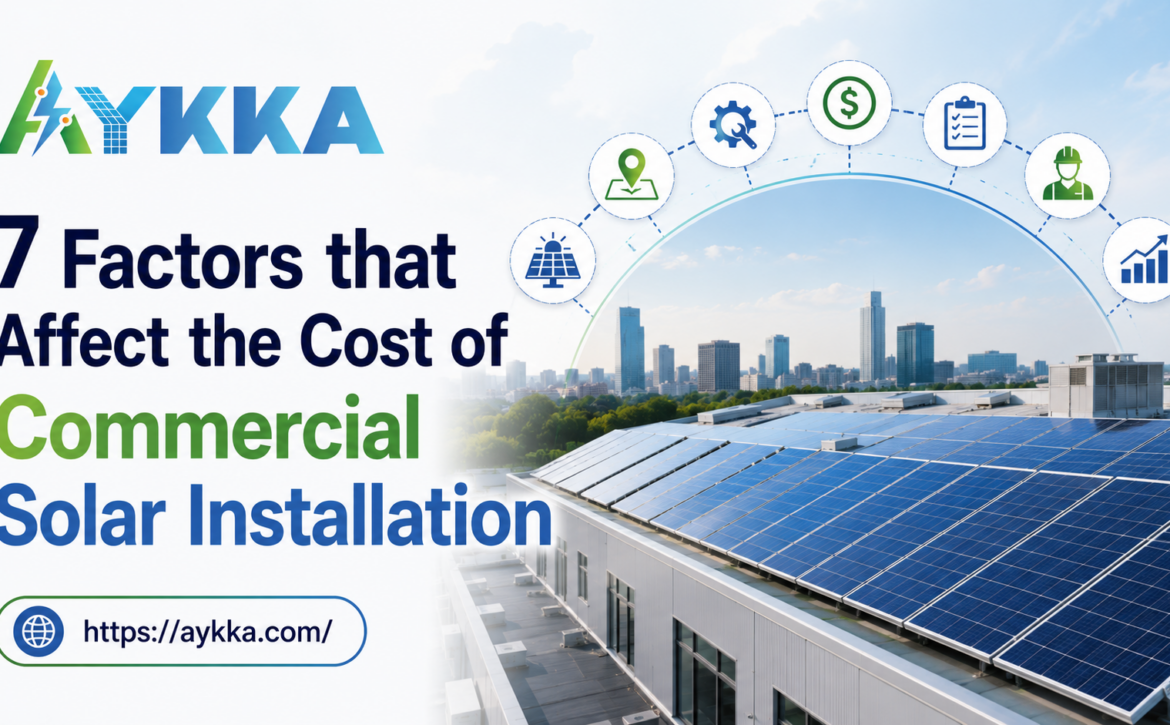
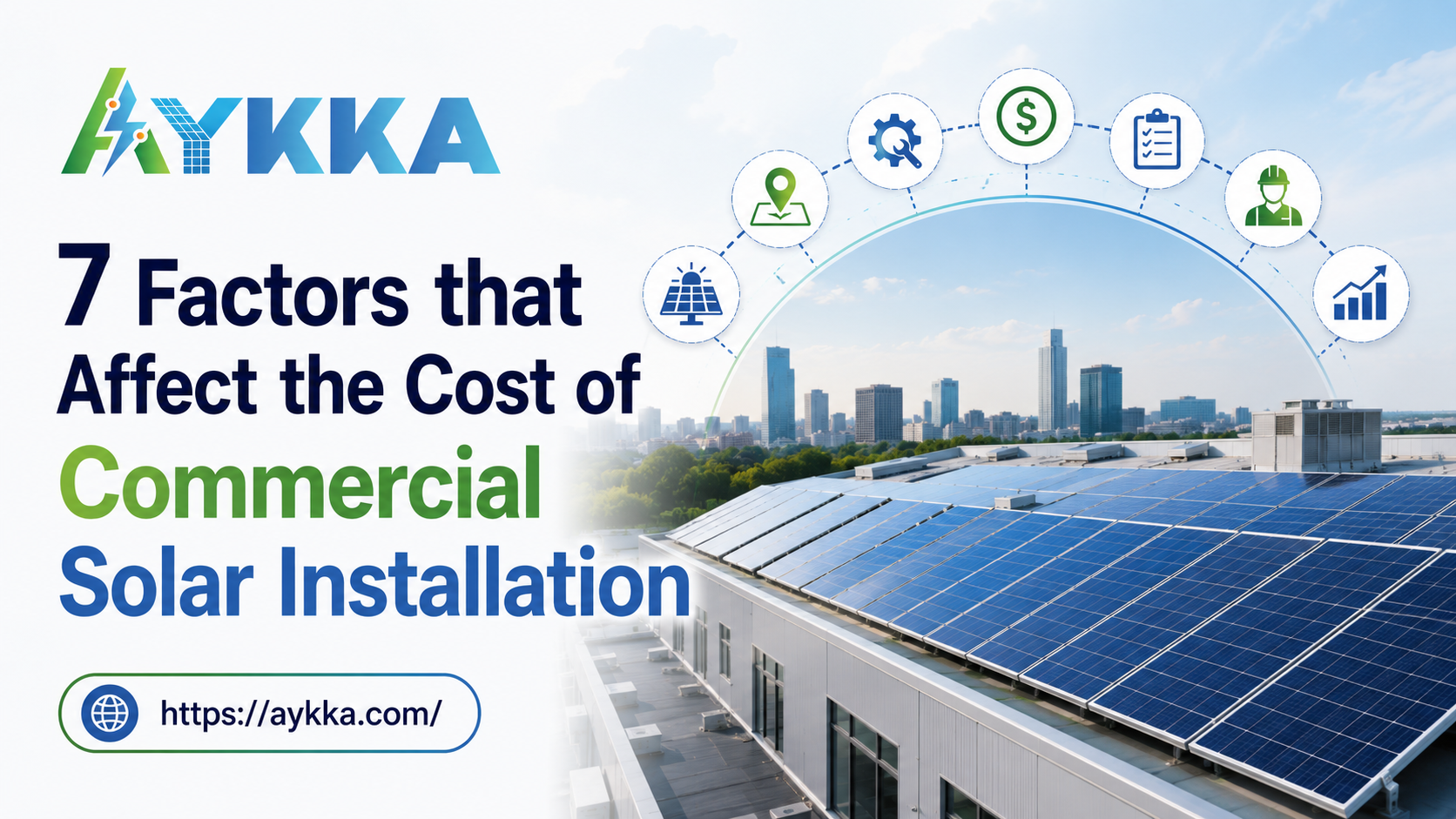
7 Factors that Affect the Cost of Commercial Solar Installation

cost of commercial solar installation

7 Factors that Affect the Cost of Commercial Solar Installation

If you run a factory, warehouse, showroom, or commercial property in Vadodara, electricity costs likely take up a large part of your monthly expenses. Power tariffs continue to rise, which is why many businesses are now evaluating the long-term value and cost of commercial solar installation before making an investment decision.

But one question comes up before anything else:

“How much does the cost of commercial solar installation actually come to for a business?”

There’s no single answer. The cost of commercial solar installation depends on multiple factors such as system size, panel quality, roof condition, electrical infrastructure, and government incentives.

A 50 kW rooftop system for a small manufacturing unit will cost far less than a 500 kW installation for a large industrial plant. Even two buildings with the same energy usage may have different project costs because of roof structure or grid connectivity.

This guide explains the main factors that affect commercial solar installation costs in simple terms, with examples relevant to businesses in Vadodara and Gujarat.

Many businesses also benefit from working with experienced solar panel manufacturers in Gujarat because local suppliers understand state regulations, subsidy approvals, and DGVCL connection processes.


Why Commercial Solar Costs Differ From One Business to Another?

Commercial solar projects are custom-designed. Unlike residential systems, business installations must handle larger electricity loads, industrial operations, and long-term savings goals.

For example:

  • A textile factory in Makarpura GIDC has different power needs than a hospital in Vadodara city.
  • A warehouse with a flat RCC roof requires different mounting structures than a sloped industrial shed.
  • A company operating heavy machinery during daytime hours sees different savings compared to an office building.

Because of these differences, solar installation costs vary from project to project.

Below are the seven biggest factors that influence commercial solar pricing:

1. System Size and Electricity Consumption

The biggest factor affecting cost is system capacity, measured in kilowatts (kW) or megawatts (MW).

Larger systems cost more overall, but the cost per watt usually becomes lower because fixed expenses such as engineering, permits, transport, and labor get distributed across a larger setup.

Typical Commercial Solar Costs in Gujarat

  • 25–100 kW systems: Around ₹18–₹30 lakh
    Suitable for retail shops, SMEs, offices, and small factories
  • 100–500 kW systems: Around ₹40 lakh–₹1.2 crore
    Common for manufacturing plants, schools, hotels, and institutions
  • 500 kW–2 MW+ systems: ₹1.5 crore and above
    Used for large industrial facilities and logistics parks

Before deciding system size, review at least 12 months of electricity bills. This gives a realistic picture of energy usage.

Oversizing increases project cost unnecessarily. Undersizing reduces potential savings.

2. Type and Quality of Solar Panels

Solar panel selection directly affects both installation cost and long-term performance.

Higher-quality panels produce more electricity over time and usually come with stronger warranties.

Common Commercial Solar Panel Types

Monocrystalline Panels

  • Higher efficiency, usually 19–22%
  • Better performance in limited roof space
  • Longer lifespan
  • Higher upfront cost

These panels work well for older industrial plots in Vadodara where roof space is limited.

Polycrystalline Panels

  • Lower cost
  • Slightly lower efficiency
  • Widely used across Gujarat commercial projects

Bifacial Panels

  • Generate electricity from both sides
  • Effective for ground-mounted systems
  • Good option for open industrial land

For many businesses, investing in efficient panels reduces the number of modules required. This lowers mounting and structural costs while improving energy generation.

3. Mounting Structure and Installation Method

Installation type changes both material and labor costs.

Commercial solar systems are generally installed using one of these methods:

Rooftop Solar

The most common commercial option.

  • Lower installation cost
  • Faster approvals
  • Best for factories and commercial buildings

Ground-Mounted Solar

Installed on open land.

  • Better panel orientation
  • Higher electricity generation potential
  • Additional civil and foundation work required

Solar Carports

Panels installed above parking areas.

  • Higher project cost
  • Provides shaded parking
  • Improves space utilization

In many Vadodara GIDC properties, flat industrial roofs use ballasted mounting systems, which avoid roof drilling. Older or fragile roofs often require additional structural reinforcement, increasing overall project cost.

4. Inverter Technology and Electrical Infrastructure

Solar panels generate DC power. Inverters convert this into usable AC electricity.

The inverter type affects efficiency, reliability, and project pricing.

String Inverters

  • Most common in commercial projects
  • Lower cost per kW
  • Suitable for large, uniform rooftops

Microinverters

  • Installed at panel level
  • Better for shaded roofs
  • Higher installation cost

Hybrid Inverters

  • Compatible with battery storage
  • Useful for backup power applications

Electrical infrastructure also affects pricing.

For example:

  • Long cable routes increase wiring expenses
  • Old electrical panels may need upgrades
  • Additional switchgear and safety systems add cost

Many businesses underestimate these costs during initial discussions.

5. Location, Sunlight Availability, and Grid Connectivity

Vadodara and most parts of Gujarat receive strong sunlight throughout the year, averaging around 5.5 to 6 peak sun hours daily.

This improves solar energy production and reduces the system size needed to offset electricity bills.

Properties with easier DGVCL grid access usually face fewer approval delays and lower connection costs.

However, remote industrial locations sometimes require:

  • Longer cabling
  • Transformer upgrades
  • Additional electrical work

These expenses alone add ₹2–₹5 lakh or more to a project.

6. Government Subsidies and Tax Benefits

Government incentives reduce the effective cost of commercial solar systems significantly.

Businesses in Gujarat benefit from several financial advantages.

Accelerated Depreciation (AD)

Companies claim up to 40% depreciation in the first year under income tax rules.

This improves cash flow and reduces taxable income.

GEDA Solar Schemes

The Gujarat Energy Development Agency occasionally provides rooftop solar incentives for eligible businesses.

Net Metering

Extra electricity generated by your solar system gets exported to the grid.

The exported units are adjusted against your electricity bill through DGVCL.

This improves ROI and shortens payback periods.

GST Input Tax Credit

GST-registered businesses claim input tax credit on:

  • Solar panels
  • Inverters
  • Mounting structures
  • Installation services

After applying available incentives and tax benefits, many commercial projects in Vadodara recover their investment within 4–6 years.

7. Installer Expertise and Project Soft Costs

Solar installation isn’t only about panels and inverters.

Soft costs usually account for 15–25% of total project value.

These include:

  • Site surveys
  • Structural audits
  • Engineering design
  • Permits
  • Net metering approvals
  • Earthing and lightning protection
  • Monitoring systems
  • Commissioning

An experienced local installer understands DGVCL approval procedures and Gujarat regulations. This reduces delays and avoids design mistakes.

Always ask for itemized quotations from multiple installers.

A lower quote sometimes excludes critical costs, which appear later during installation.

Estimated Commercial Solar Costs in Vadodara (2026)

Here’s a realistic pricing range for rooftop commercial solar systems before subsidies and tax benefits:

System Size

Estimated Cost

Average Payback

50 kW

₹22–₹30 lakh

5–6 years

100 kW

₹40–₹55 lakh

4–5 years

250 kW

₹90 lakh–₹1.2 crore

4–5 years

500 kW

₹1.5–₹2.2 crore

3.5–5 years

Conclusion

The cost of commercial solar installation in Vadodara depends on several important factors, including system size, panel quality, roof structure, inverter technology, and available government incentives.

Businesses that invest in the right commercial and industrial solar setup reduce long-term electricity expenses, improve energy stability, and protect themselves from rising commercial power tariffs for the next 25 years.

Gujarat remains one of India’s strongest markets for commercial and industrial solar adoption because of high solar irradiance, supportive state policies, and strong industrial infrastructure.

Companies looking to optimize the cost of commercial solar installation while improving long-term ROI often work with Aykka Technovision Private Limited for project planning, engineering, installation, and energy-saving solar solutions designed for factories, warehouses, manufacturing plants, and commercial buildings.

Frequently Asked Questions

What is the average commercial solar cost per watt in Gujarat?

In 2026, most commercial solar systems in Gujarat cost around ₹38–₹55 per watt depending on project size, equipment quality, and installation complexity.

Under DGVCL net metering policies, excess electricity generated by your solar system gets exported to the grid. Those exported units reduce your electricity bill through energy credits.

Most businesses use grid-connected solar systems without batteries because net metering already handles excess electricity efficiently.

Yes. GST-registered businesses claim input tax credit on solar equipment and installation expenses, reducing overall project cost.

Most commercial solar panels come with 25–30-year performance warranties.

Read More

How to Clean Rooftop Solar Panels Effectively?

rooftop solar

A solar system is a good long-term investment, but it’s just as important to keep your rooftop solar panels in good shape so they work well and produce the most energy. Solar panels don’t have any moving parts, so they don’t need much maintenance. But in a country like India, dust, pollution, and bird droppings can quickly lower efficiency and hurt power generation as a whole.

Cleaning your solar rooftop system on a regular basis not only makes it more efficient, but it also helps it last longer. If you don’t keep up with maintenance, your performance will slowly go down, which will affect your return on investment over time. If you clean your solar panels on time, they will work well all year, even in bad weather. Thinking about installing a rooftop solar system for your home? Explore our residential solar panel installation services.

This guide will show you how to clean your solar panels safely on the roof, why it’s important to do it regularly, and how to keep your system running well for a long time.

Why is it important to clean solar panels on roofs?

Many people think that rain can clean solar panels, but that’s not always the case.

Panels gather over time:

  • Dirt and dust
  • Droppings from birds
  • Leftover pollution
  • Trash and leaves

A thin layer of dirt can cut efficiency by 15% to 25%.

More sunlight means more electricity generation, so clean your rooftop solar panels.

How can you safely clean rooftop solar panels?

Cleaning the solar panels on your roof is easy if you do it right.

1. Pick the Right Time

  • Clean in the early morning or late evening.
  • Stay out of the sun during peak hours.

2. Use water that isn’t hard

  • Choose clean or filtered water
  • Stay away from stains from hard water.

3. Use a mild soap solution

  • Combine water with light detergent.
  • Stay away from strong chemicals

4. Use gentle cleaning tools

  • Cloth made of microfiber
  • A sponge or a soft brush

5. Stay away from high-pressure water

  • Don’t use pressure washers
  • A gentle rinse is all you need.

6. Clean Only the Outside

  • Don’t touch the wiring or the inside parts.

7. Follow safety rules

  • Wear the right shoes
  • Don’t walk on roofs that are slippery
  • Get help if you need it.

The Best Tools for Cleaning Solar Panels On Roofs

You only need a few simple tools to clean your solar rooftop India system:

  • A soft brush or sponge
  • Cloth made of microfiber
  • A bucket with a mild soap solution
  • Low-pressure hose pipe

How often do you need to clean solar panels in India?

How often you need to clean depends on where you live:

  • Every two to three months in cities
  • Every month or two in dusty areas
  • Areas with low pollution: every three to six months

Cleaning your rooftop solar panels on a regular basis keeps them working well all year.

Signs Your Solar Panels Need to Be Cleaned

If you see any of the following, you should clean your panels:

  • Less electricity being produced
  • Dust or stains that you can see
  • Bird poop on panels
  • Performance that isn’t consistent

Things You Shouldn’t Do When Cleaning Solar Panels

To keep your system safe, don’t make these mistakes:

  • Using water that is hard or salty
  • Cleaning on hot afternoons
  • Using rough cloth or scrubbers
  • Walking on boards
  • Using water under high pressure

DIY vs Professional Solar Panel Cleaning

Factor

DIY Cleaning

Professional Cleaning

Cost

Low

Medium

Safety

Risky

Safe

Efficiency

Moderate

High

Best For

Small homes

Large systems

If your solar rooftop system is large or difficult to access, it is better to hire a professional for safe and proper cleaning.

How much does it cost to clean solar panels in India?

The size of the solar panel system affects how much it costs to clean:

  • For each panel: ₹10 to ₹25
  • Cleaning a home costs between ₹300 and ₹1500.
  • Maintenance once a year: ₹2000–₹5000

How does cleaning make solar panels work better?

Cleaning regularly helps:

  • Make more energy
  • Cut down on loss of efficiency
  • Make the system last longer
  • Get the most out of your investment

Lower electricity bills when panels are clean.

Seasonal Tips For Cleaning Solar Panels In India

Summer: Clean often because of the dust

Monsoon: Look for stains and residue

Winter: Cleaning every so often is enough

Conclusion

Cleaning your rooftop solar panels is an uncomplicated but very important part of taking care of your solar system. Clean solar panels allow the maximum amount of sunlight to reach them, thereby boosting their efficiency and energy output.

Keep your system performing at its best, clean rooftop solar panels effectively with Aykka Technovision Private Limited. In the end, regular cleaning is one of the simplest and most effective ways to keep your rooftop solar system safe, efficient, and future-ready. 

Frequently Asked Questions

What safety precautions should I take while cleaning rooftop solar panels?

Always utilize a safety harness, and make sure you’re wearing shoes with a good grip. It’s also best to avoid cleaning on days when the weather is wet or windy.

Yes, bird poop can block sunlight and leave stains that last a long time if you don’t clean them up right away.

Yes, clean panels make more electricity, which saves you more money in the long run and increases your return on investment.

A microfiber cloth is the best choice because it is soft, doesn’t scratch the panel surface, and doesn’t hurt it.

No, cleaning does not void the warranty as long as you use the right methods and don’t break the panels.

Read More

Top Solar Panel Companies in India

top solar panel companies in india

Solar energy has begun to play a serious role in the Indian power sector. In recent years, a greater number of homes, businesses, and factories have started to add solar systems to rooftops and open land. Energy bills soar, and humanity searches for smarter ways to deal with energy prices. Solar power offers a practical answer.

The first and foremost thing people search online when they start planning a solar project is the top solar panel companies in india. The provider you choose matters more than most people realize. A reputable company will also do more than just install panels. They advise on the design of systems, take care of installation and help with long-term performance.

Solar power reduces dependence on the traditional electricity grid and helps cut monthly bills. Rooftop solar systems work well for houses, office buildings, manufacturing units, schools, and even hospitals. Government initiatives like rooftop subsidies and net metering also make solar adoption easier in both cities and smaller towns.

This guide walks through a few of the best solar companies, what you should look for before choosing one, and appreciation for the practical benefits of solar panels available for people across India.

Why Does Solar Energy See Growing Demand in India?

Nearly every region in India gets ample sunlight throughout the year. For that reason alone, solar power is an obvious energy option. When solar panels convert sunlight into electricity, photovoltaic cells power buildings or return electricity to the grid.

But sunlight is only part of what explains the rapid growth of solar energy.

There are a number of factors driving the transition to solar:

  • Electricity prices go up nearly every year
  • Companies want greater control over energy costs
  • Government policies promoting the adoption of renewable energy
  • An increasing awareness surrounding the environment
  • The price of solar equipment has fallen

Many buildings also have large unused rooftop space. Solar systems turn that empty space into a clean energy source. Homes, schools, hospitals, and industrial buildings now use rooftops to produce electricity during the day.

Key Factors When Choosing a Solar Company

In other words, switching to solar panels is a long-term investment. The vast majority of systems last 20 to 25 years. For that reason, your choice of a solar company has a big impact on system performance and long-term savings.

There are a few key factors to consider before making your final decision.

Industry Experience

More experienced companies typically have a smoother project management process. An experienced team would be aware of site challenges, weather conditions, and the requirements for systems designs.

A company that has handled multiple installations across commercial, industrial, and residential projects will take care of better planning and execution.

Technology and Equipment

This is because solar systems need high-quality components. Good solar modules with long warranties, reliable inverters, and strong mounting structures enable systems to perform efficiently over time.

Reputable solar companies generally employ certified equipment coupled with warranties that safeguard the investment.

Engineering and Installation Team

It takes proper engineering and trained technicians to install a solar system. An experienced team makes sure the panels are installed safely and positioned strategically to receive maximum exposure to sunlight.

A good installation enhances system performance and avoids future technical problems.

After Sales Support

Solar panels stay on rooftops for decades. Regular monitoring, maintenance checks, and technical support keep the system working smoothly.

Reliable companies offer post installation support so users receive consistent electricity production.

Project Portfolio

Looking at previous projects gives a clear idea of a company’s capability. Companies with a diverse project portfolio often have stronger expertise.

Residential rooftops, commercial buildings, and industrial solar systems all require slightly different approaches.

Leading Solar Providers in India

India has many solar companies working in manufacturing, installation, and energy services. Some focus mainly on producing solar panels, while others offer complete solar EPC services including design, installation, and maintenance.

Here are a few well-known companies operating in the Indian solar industry.

1.Aykka Technovision Private Limited

Aykka Technovision Private Limited is the top solar panel company in India, offering realistic power solutions for business owners and property owners. Founded in 2019, the company specializes in solar system integrations and offers EPC services as well as consulting around renewable energy projects. Their team assists clients with the entire solar journey, including system design and installation and performance optimization. It provides rooftop solar systems for homes, businesses, and factories to reduce electricity costs and promote adoption of clean energy. Through turnkey EPC, financing assistance and solar-as-a-service offerings, the company is devoted to making it easy for businesses and organizations to adopt solar. With the backing of a group having over 40 years of business legacy to it, the company aims to enable India’s journey towards sustainable energy solutions. Aykka Technovision Private Limited Helping India’s growing renewable energy ecosystem with the right-performing solar technologies through systematic execution.

2.Tata Power Solar

Tata Power Solar has extensive experience in India’s renewable energy sector and is among the best solar panel company in india. The company specializes in both large utility-scale solar projects and rooftop systems.

Key highlights:

  • Years of experience with solar engineering
  • EPC and solar manufacturing services
  • Voiced profound expertise in commercial and industrial projects
  • Nationwide service network

3.Adani Solar

Adani Solar has one of the biggest solar manufacturing plants in India. It manufactures highly efficient solar modules for utility-scale solar farms and infrastructure projects.

Key highlights:

  • Large-scale integrated manufacturing
  • Advanced solar cell technology
  • Utility-scale solar project involvement

4.Vikram Solar

Vikram Solar — Leading solar module manufacturer in India. The firm also provides solar panels for overseas installations, though its focus is domestic sales.

Key highlights:

  • High-efficiency photovoltaic modules
  • Global project presence
  • Large-scale solar power solutions

5.Waaree Energies

Waaree Energies is a top solar power panel manufacturing company in India. From solar modules to EPC and rooftop solar solutions.

Key highlights:

  • Wide distribution network
  • Multiple manufacturing facilities
  • Residential and commercial solar solutions

6.RenewSys India

The first solar component manufacturer with the complete chain of solar solutions. (solar modules; cells and encapsulants)

Key highlights:

  • Integrated solar component production
  • International market presence
  • Technology focused manufacturing

Growth of Rooftop Solar in Indian Cities

Rooftop solar is booming in several Indian cities. So apartment complexes, office buildings, and industrial facilities installed solar systems to reduce their electricity bills.

Major cities including Ahmedabad, Mumbai, Delhi, Bengaluru, and Hyderabad are witnessing consistent growth in rooftop solar capacity. Government programs are adding to that urgency by providing financial incentives and conditional approvals in a much faster time.

Most people search for the top solar panel companies in india before installing systems so they can compare service quality, installation experience, and long-term support. A well-designed solar system can enhance electricity generation and prolong the lifetime of equipment.

Benefits of Solar Panels for Homes and Businesses

Solar energy offers both financial and environmental advantages. For many households and companies, the shift toward solar begins after understanding the benefits of solar panels.

Here are some of the most practical benefits.

Lower Electricity Bills

Solar systems produce electricity directly from sunlight. It can be used for the monthly electricity cost and decrease the dependence on grid power.

Long-Term Investment

Solar panels last for decades. Once installed, it continues to produce electricity year after year with an important low operating cost.

Clean Energy Production

Solar power produces clean, emission-free energy. It helps reduce carbon output and steward the environment.

Energy Independence

Solar energy allows businesses and homes to have control over their power gen. Energy resilience is the concept of minimizing grid reliance.

Increased Property Value

There are economic benefits and a return on investment (ROI) of solar energy, which might explain why buildings with solar systems typically appreciate faster due to lower energy costs, sustainable infrastructure, etc. Overall, they make solar energy a useful solution for homes, institutions, and commercial spaces.

Solar EPC Services and Their Role

There are multiple stages in any solar project, and proper coordination is needed to manage all these phases. That is where EPC services come into play, in which “EPC” refers to engineering, procurement, and construction.

Instead, an EPC provider handles your entire solar project from start to finish—planning through commissioning.

Typical EPC responsibilities include the following:

  • Site feasibility analysis
  • Solar system design and energy estimation
  • Procurement of solar panels and inverters
  • Installation and electrical integration
  • Grid connection and system commissioning

If searching for trusted energy generation and project processes, professional EPC solutions guarantee the very same.

Government Policies Supporting Solar Growth

In India, there are various government schemes to boost renewable energy development. Our programs enable the residential and commercial sectors to adopt solar.

Key initiatives include:

  • Rooftop solar subsidy programs
  • Net metering policies
  • National renewable energy targets
  • Development of large solar parks

These types of initiatives also help lower the cost of solar investments for homeowners and businesses.

Future of Solar Energy in India

India has a promising future in solar energy for home. The country intends to exponentially expand its ability to generate renewable energy in the coming years, and solar power is at the heart of that effort.

Several factors support this growth:

  • Declining solar module prices
  • Rising industrial energy demand
  • Expansion of solar parks and infrastructure
  • Growth of battery storage technology
  • Continued policy support for renewable energy

Solar technology continues refining and advancing, as well, helping it become more efficient and reliable. For many companies, solar systems are the long-term stable energy strategy.

Conclusion

The solar energy transition in India is growing rapidly as people become more aware of the advantages of renewable power. Rooftops, industrial solar plants, and large-scale projects all contribute to the country’s move from fossil fuels to clean energy.

But choosing the best provider remains one of the most crucial steps in the process. With such knowledge, high-quality equipment and permanent service will ensure long-term operation of the system.

Owners of businesses and properties who plan a shift to solar energy gain value from support of experienced professionals. The process stays smooth with expert guidance. Companies such as Aykka, known as a best solar panel company india option for many organizations, provide structured solar solutions. Businesses focus on efficient energy production and long term sustainability.

Read More

The Ultimate Guide to Solar Energy for Home

solar energy for home

The rising power bills force several families to look for better energy alternatives. Solar power provides long-term savings and reliable energy. An increasing number of homeowners are now getting solar panel in vadodara because there is plenty of sunshine round the year. The local climate allows for high solar production output, which is considered a strong investment in installing residential solar systems. By planning in advance, you prepare yourself to rely little upon the grid, and earn an energy bonus. This guide explains how the system works, the costs involved, key benefits, and the factors you should review before installing solar panels or solar energy for home.

Why Solar Energy Adoption Is Growing in Vadodara

Vadodara has the highest number of days on which, for most months, it records fairly high solar radiation. This increases panel output and system efficiency.

Key reasons homeowners choose solar:

  • Rising electricity tariffs
  • Government subsidy programs
  • Net metering policies
  • Long panel lifespan, often 25 years or more
  • Low maintenance requirement

Several residential societies now switch to using solar rooftops. Real estate investors also prefer homes with solar.

How Solar Energy for Home Systems Work?

A home solar system changes sunlight into electricity with silicon photovoltaic cells. These systems connect to your home distribution board.

Main components include:

1. Solar Panels

Panels are designed to capture the sunshine and change it into DC power.

2. Solar Inverter

Refers to the inverter that converts a direct current power supply into alternating current electricity that you can actually use.

3. Mounting Structure

Supports panels on the rooftop and keeps the correct tilt angle.

4. Net Meter

Tracks electricity export and import from the grid.

During the daytime, the system powers appliances. Extra power moves to the grid through net metering.

Types of Solar Panel in Vadodara for Residential Use

Residential choices are based on available money, available space, and energy needs.

Monocrystalline Panels

  • High efficiency
  • Require less roof space
  • Higher upfront cost

Polycrystalline Panels

  • Lower cost
  • Slightly lower efficiency
  • Suitable for larger rooftops

Bifacial Panels

  • Generate power from both sides
  • Higher output in reflective environments

For city homes with not very large roof areas, monocrystalline panels often provide the best energy savings per square foot.

Cost Breakdown of Installing Solar Panel in Vadodara

System costs depend on the system’s capacity, the brand name, and the complexity of installation.

Average residential pricing cost:

  • 1 kW system: ₹60,000 – ₹80,000
  • 3 kW system: ₹1.8 lakh – ₹2.4 lakh
  • 5 kW system: ₹2.8 lakh – ₹3.8 lakh

Factors affecting price:

  • Rooftop structure type
  • Inverter brand
  • Wiring distance
  • Government subsidy eligibility

Because of the strong sunshine and net metering benefits, Return on Investment (ROI) in Gujarat must be earned. On average, this returns in 4-6 years.

Government Subsidies and Net Metering Benefits

Government programs reduce installation costs for homeowners.

Subsidy benefits often include:

  • Central financial assistance support
  • State policy incentives
  • Faster ROI timeline

Net metering permits power to be exported to the grid. Your electricity bill reduces significantly.

The Process of Installing Solar Systems in Homes

Professional installers follow structured steps.

Step-by-step process:

  1. Site inspection and shadow analysis
  2. Load requirement calculation
  3. System design planning
  4. Government approval paperwork
  5. Installation and testing
  6. Net meter activation

Installation typically requires 2 to 5 days once approval is given.

Guidelines on how to maintain solar panels for a longer time

Solar systems need minimal upkeep. Regular checks improve performance.

Maintenance checklist:

  • Clean panels every 15 to 20 days
  • Check inverter display for faults
  • Inspect wiring annually
  • Monitor daily generation data

Dust accumulation reduces efficiency by up to 15 percent in urban regions.

Related Benefits of Residential Solar Adoption

For householders that install solar power, the home’s electricity bill will fall by 60% to 90% based on system size. As buyers prefer homes that are energy efficient, homes can be expected to naturally gain in value rather than shrink. Many families are installing solar energy for home in order to assure firm power in the hot summer. Solar systems also decrease carbon emissions and contribute to cleaner city air.

Choosing the Right Solar Partner in Vadodara

Before selecting an installer, check:

  • Company installation experience
  • Warranty terms
  • After-sales service support
  • Local project portfolio
  • Customer reviews

Look for the experience and quality of service of the company before making a final decision.

Common Mistakes Homeowners Should Avoid

Some kind of bad happens to way too many homeowners due to a lack of planning.

Don’t make these errors:

  • Choosing systems just based on price
  • Skipping the roof strength check
  • Choosing non-licensed installers
  • Generation performance monitoring as a byproduct of good design

The quality of installation directly affects the life span and power output of your system.

Future of Residential Solar in Vadodara

The rise of solar adoption has led to runaway growth. Gujarat is planning a huge leap in renewable capacity. Meanwhile, nighttime power consumption is dropping thanks to the spread of battery storage technologies. Deployment of smart home solar systems means that the average position of urban homes should be more energy efficient.

Conclusion

Switching to solar power not only can reduce long-term costs but also increase the stability of your energy use pattern. Living on solar power is becoming an increasingly self-sufficient home atmosphere. It’s also helpful in terms of the environment. On the other hand, the various facilities available in Vadodara make it possible for people to use low-carbon technology. Again, installing solar panel in Vadodara provides homeowners with a good opportunity for investing money in high sunlight levels at home. With government incentives on offer even today, there has never been a better time. If you are planning to lower your electricity bill and add to the value of your real estate assets, then invest in solar engineering products now. Contact Aykka Technovision Private Limited today for solar solutions that are tailored to your family’s energy needs within your home.

Read More

Why Professional Solar EPC Matters for Long-Term Savings in 2026?

solar epc

It is not just an environmental choice to change to solar energy, but a financial investment which will yield dividends over decades. With solar adoption swirling over the Indian regions, especially in such cities as Vadodara, homeowners are finding out that the quality of installation directly influences their future payoff. The selection of professional solar epc services does not only mean having panels on your roof but making sure that it will be as efficient as possible, long-lasting, and economical, which will multiply over the years.

As the prices of electricity keep climbing and the government subsidies offer opportunities like never before to reduce the cost of going solar, 2026 will be the right time to switch the system. But a mediocre installation and a well-done one may involve a difference of thousands of rupees in savings–or returns.

What is Solar EPC and why is it so important?

EPC is a short form which refers to the Engineering, Procurement and Construction which is a comprehensive plan that includes all the specifics of your solar installation including the design itself and the eventual commissioning. The professional EPC contractors will take care of the whole lifecycle of your solar project compared to piecemeal contractors who perform work on isolated tasks.

This combined strategy will make sure that the design of the system can fit your energy consumption habits, the purchased equipment meets the quality standards, and the installation process is carried out according to the best practices. Temperatures in Vadodara may skyrocket during summers and in that case, adequate engineering factors are even more vital to a good performance.

The Three Pillars of Professional EPC Services

Engineering: Professional solar system EPC contractors will start with site analysis, including a proper assessment of your roof structure, orientation, shading status, and weather conditions, and so on. They estimate exact energy needs and systems are made to consider future rise in consumption.

Procurement: It all depends on quality components. Skilled contractors also obtain solar panels, inverters of tier-1, which have been certified and have strong mounting structures, which can withstand monsoon seasons and changes in temperature in Vadodara.

Construction: Experienced installation personnel adhere to safety standards, proper cable handling, waterproofing and commissioning are done with minimum testing.

The effect of Professional Installation on Your Long-Term savings

1. Optimal Energy production at the outset

A professionally engineered solar system takes into account the roof peculiarities. Improperly planned installations could install panels either in half shade or with poor angles, which would cut down energy output by 15-30 percent. This will amount to lakhs of savings over a lifetime of 25 years of systems.

The engineers apply advanced software to simulate the position of the sun over a whole year so that panels maximize the sun at different times of the day. They also consider seasonal changes as unique to the geographic location of Vadodara.

2. Lower Refurbishment expenses and System Breakdowns

Good installation guarantees successful installations, which are otherwise full of problems with amateur installation:

  • Waterproofing ensures that there is no leakage on the roof which can cost thousands of dollars to fix.
  • Proper wiring of electrical systems minimizes the occurrence of fire and system outages.
  • Safe mounting is resistant to high wind during the monsoon season.
  • The rodent damage is avoided due to professional cable management.

 These preventive measures imply the reduction of the number of emergency repairs and maintenance costs during the operating period of your system.

3. Greater System Performance and Effectiveness Checking

Solar epc services provided by professionals have high-tech monitoring systems to monitor the real-time performance. With decreased efficiency you are notified of it which is much better than finding out about the issues of your electricity bill several months later.

The contemporary monitoring systems offered by authoritative contractors indicate:

  • Daily, monthly, and annual energy generation
  • Compared to expected performance System output.
  • Single panel performance to detect faulty units.
  • Measures of environmental impact.

This openness aids you to confirm that your investment is paying as assured returns.

4. Long-Term Support and Warranty Protection

Established EPC contractors have supply of extensive warranties to equipment, work and performance guarantee. This insurance is priceless at the time when problems emerge several years after installation.

Think of the case of no professional support; failure of an inverter in 5 years may cost 50,000-1,00,000 to install a new one. The normal features on professional installation are 5-10 year workmanship warranty, and help with manufacturer warranty claims.

The True Cost of Cutting Corners

Other homeowners will hire cheaper and nonqualified installers to save on initial expenses. The result of this decision is usually spectacular:

Structural Damage: The wrong way of mounting your roof may affect its structural integrity resulting in costly repairs that cost more than what you had saved.

Underperforming Systems: Systems that are poorly designed produce 20-40 percent less electricity than well engineered alternatives, and this means that you will spend a few more years on your payback period.

Safety Hazards: Poor quality of electrical work can place your family at risk of fire and possible injuries to them.

Voided Warranties: The manufacturers of equipment usually have a tendency of voiding warranties in cases where installation fails to conform to their specifications.

Those initial savings in the thousands of rupees are mere nothing in comparison with these possible expenses over decades.

What to Look for in Professional Solar EPC Services

The following factors are to be taken into consideration when selecting contractors of your residential solar rooftop project at Vadodara:

Certifications and Experience: You need to seek contractors who have a certification that is relevant to the industry, track-record, and collection of finished work in your locale.

Open Pricing: Detailed quotes that separate cost of equipment, installation cost and maintenance cost is a clear sign of professionalism.

Quality Components: Check that the equipment that is proposed is tier-1 solar panels, which are certified inverters as well as corrosion-resistant mounting structures that should be able to withstand the local climate conditions.

Post-Installation Support: Extensive after sales services, such as performance monitoring, maintenance packages and responsive customer services.

Local Expertise: With local knowledge of the municipalities of Vadodara, the grid connection process, and the subsidy application process, the process of installation is simplified.

Making Your Investment Count in 2026

The development of solar technology is going on, with efficiency of the panel improving and cost reduction making 2026 the right year to install. Nevertheless, such technological benefits can only be realized with professional implementation.

Professional installation of the residential solar system in Vadodara has a payback period of 4-6 years. Amateur installations may go to 8-10 years- or never be paying back at all with system failures forcing an early replacement.

In addition to the monetary benefits, the professional installations provide grid stability, lower your carbon footprint, and contribute to higher real estate division. The prospective home buyers are moving towards attaching quality solar installations as a beneficial property, as is the case of the modern kitchen or refurbished bathrooms.

Conclusion

The conversion to solar is one of the largest home improvements you will make. Your investment choice is either going to turn into a long-term saving, or the major source of frustration, depending on the choice between professional solar EPC and more affordable options.

With the ever increasing electricity prices and the sophistication of solar technology, the professional and amateur installations are gaining expertise. Professional contractors do not install equipment, they design tailor-made energy solutions that will give you decades of maximum returns.

In case you plan to install solar on the rooftop of your residence in Vadodara, then joining hands with the professionals will guarantee you the savings promised as soon as you invest in it. The case of AYKKA Technovision Private Limited is a vivid illustration of how one should go about the process of turning solar potential into long term financial gain.

Don’t let your solar dreams become a costly mistake. Get professional solar epc services at the cost that will secure your home, save you more, and ensure your security over the next 25 years. The distinction of fine and good installation work gets better each year- professional knowledge is the best bet you will ever take in addition to the panels.

Read More

Top 10 Benefits of Solar Panels for Homes in Vadodara

benefits of solar panels

Adopting solar energy is more than just a trend–it’s become increasingly popular as well as financially and environmentally beneficial for thousands of families Whether you’re upgrading your current energy system or getting ready to put solar panels on a new home, understanding the benefits of solar panels can help you make an informed decision.

In our blog, we’ve compiled the top ten advantages of home solar panels to see how solar is a good long-term decision for your pocketbook, your comfort and for the earth. The article is largely about vadodara, but the footnotes are useful also for others elsewhere in places such as vadodara who are considering affixing solar installations.

1. Significant Reduction in Electricity Bills

A huge benefit to putting up solar panels is the instant savings you’ll see on your electricity bill. Home owners are also increasingly turning to alternative solutions in the face of soaring electricity prices to save in the longer term.

When you switch to solar:

  • Suddenly a good chunk of your energy usage is now free and renewable.
  • You get less exposed to volatile grid prices.
  • Your return on investment is usually a few years.

Paired with the right installation partner, which is most commonly researched under things like best solar company in Vadodara, homeowners get safe savings month after month.

2. Solar Energy Increases Property Value

Solar energy Property prices are rising because buyers aspire for homes with lower running costs and reliable savings. Functions with rooftop solar Often quickly and I sell higher prices Compared to similar homes Without solar energy, you reduce monthly bills, Establish it better energy efficiency, And create a stronger selling point to your home. As consciousness clean energy grows, with dwelling solar systems I evolve more attractive to the market.

3.Lower Carbon Footprint and Environment-Friendly Living

Solar panels contribute to cleaner air, fewer carbon emissions and a healthier planet. The burning of fossil fuels in energy generation produces poisonous pollutants in the air. The only human intervention with solar is when electricity is generated.

Solar helps you:

  • Reduce greenhouse gases
  • Support clean, renewable energy initiatives
  • Contribute, in a positive way to climate sustainability targets

Your home becomes part of the wider clean-energy shift. This is another major area where you experience the benefits of solar panels. As you transition to solar, your home becomes part of the global clean energy initiative.

4. Reliable and Low-Maintenance Energy Source

Solar panels need little upkeep. Good for homeowners with busy schedules. Systems stay strong in rough weather. They deliver steady power in changing climates.

Maintenance usually includes:

  • Annual cleaning
  • Occasional inspection
  • Monitoring via mobile apps

This minimalist arrangement allows more homes to make solar systems over regular electricity sources.

5. Protection Against Rising Electricity Prices

Electricity prices rise every year. When you put solar panels on your roof, you hedge against the sudden or surprise hikes in tariffs on fossil fuels.

Solar users get:

  • More predictable energy expenses
  • Stable pricing for years
  • Greater energy independence

So you make a savvy long-term financial decision, especially in places where the cost of electricity keeps going up.

6. Government Incentives and Rebates

A number of governments, including here in vadodara, offer a subsidy to homeowners who adopt renewable energy endeavours. These refunds help consumers cut down on install cost. 

Depending on the region, benefits may include:

  • Tax credits
  • Subsidies
  • Low-interest financing options

These subsidies also cut down the time it takes to recoup construction costs and attract more homeowners toward solar power.

7. Power Backup Alternatives in Hybrids Systems

Contemporary solar arrays rely on hybrid systems, which stack extra energy inside batteries for outages or at peak hours.

With hybrid solar:

  • You remain independent of the grid
  • You lower our dependence on diesel generators.
  • Your home runs self sufficient and energy efficient

If your grid supply is unstable, solar panels provide a major benefit.

8. Better Performance in Sunny Climates

If that is the case, then regions like vadodara receive good amount of sunshine all through the year and therefore are conducive for solar power. Open rooftop installations and constant sunlight can contribute to increased energy generation.

  1. Long Lifespan and High Durability

Good quality solar panels last for 25 years or more. New solar tech to minimise performance loss. Your rig delivers consistent power for years without having to throw anything away.

Features include:

  • Anti-reflective coating


  • High endurance against harsh climates


  • Strong warranties from manufacturers

This dependability is a big part of what makes solar so powerful as a home energy solution.

10. Supports Sustainable Smart Homes

Today, solar panels are a central piece of nascent smart-home ecosystems. By combining with IoT-capable devices, EV chargers or home automation systems, solar makes operations more efficient while lowering costs.

Your home becomes:

  • Smarter
  • Greener
  • More cost-efficient

It puts homeowners on the front foot when it comes to the future of energy use.

How Solar Companies Enable You to Get the Most Value

Searching online for the best solar company in Vadodara homeowners demand professional guidance, actionable plan, low online costs, and 24/7 support. You can’t succeed alone in solar – a reliable partner in the form of:

  • Evaluate your property’s suitability
  • Design a customized rooftop solution
  • Ensure proper installation
  • Offer after-sales service
  • Maximize overall performance and ROI

Choose the perfect solar partner and benefit fully from your solar panels without any hassle.

Conclusion

Why invest in Solar? Solar pays off on multiple levels whether you’re looking to save money, reduce your carbon footprint, or increase your property value. You reduce your bills, raise property value and help the environment. If you are considering adding home solar, now is a good time to make the switch. For instruction, installation and service Aykka Technovision Private Limited can assist you every step of the way.

Solar ROI Payback Calculator