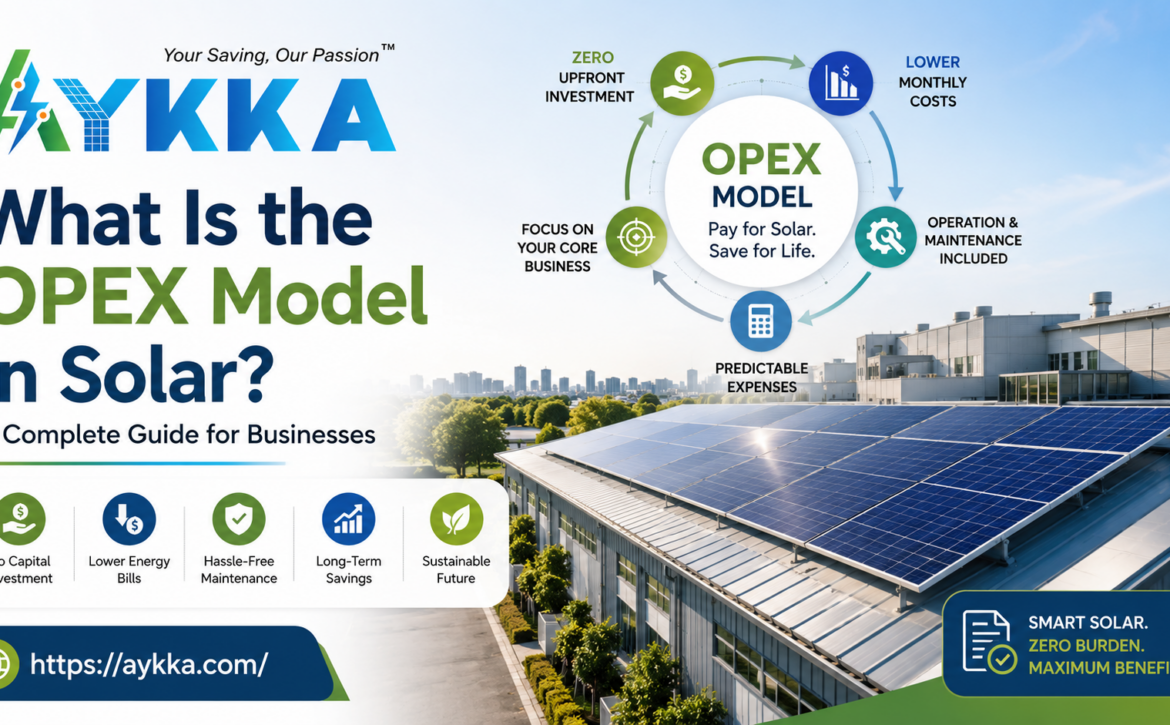
What Is the OPEX Model in Solar? A Complete Guide for Businesses

The opex model in solar is a financing and operating approach that allows businesses to use solar power without purchasing the solar system upfront. Under this model, a third-party provider typically invests in, owns, and maintains the solar installation, while the business pays for the electricity generated or through a fixed recurring charge. This reduces the need for a large initial capital investment and can make solar adoption easier for businesses with limited capital budgets. However, the OPEX model also involves long-term contractual commitments, payment terms, ownership conditions, and performance responsibilities that businesses need to evaluate carefully. This guide explains how the OPEX solar model works, its benefits and limitations, and the key factors businesses should consider before choosing it.
What Is an OPEX Solar Model?
OPEX solar model is when a business pays for solar power as a recurring cost, the same way it pays a utility bill, instead of buying a solar system outright. The provider owns and usually maintains the equipment. The business just pays for what it uses, or for access to it, under a contract.
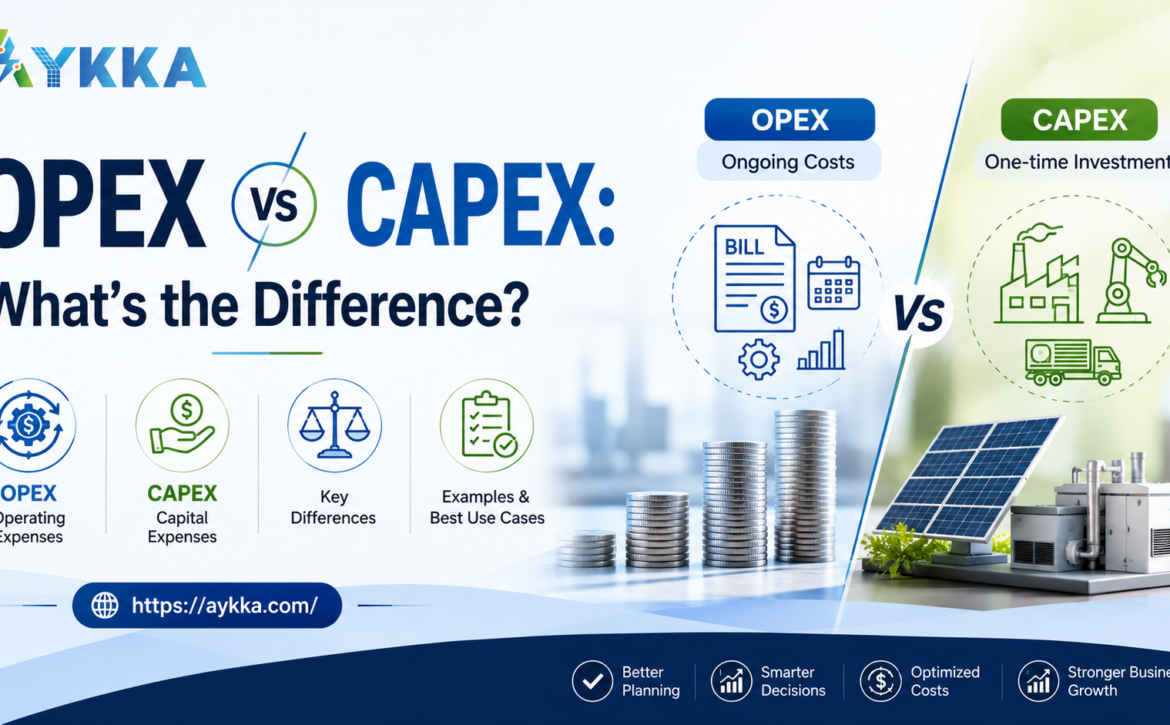
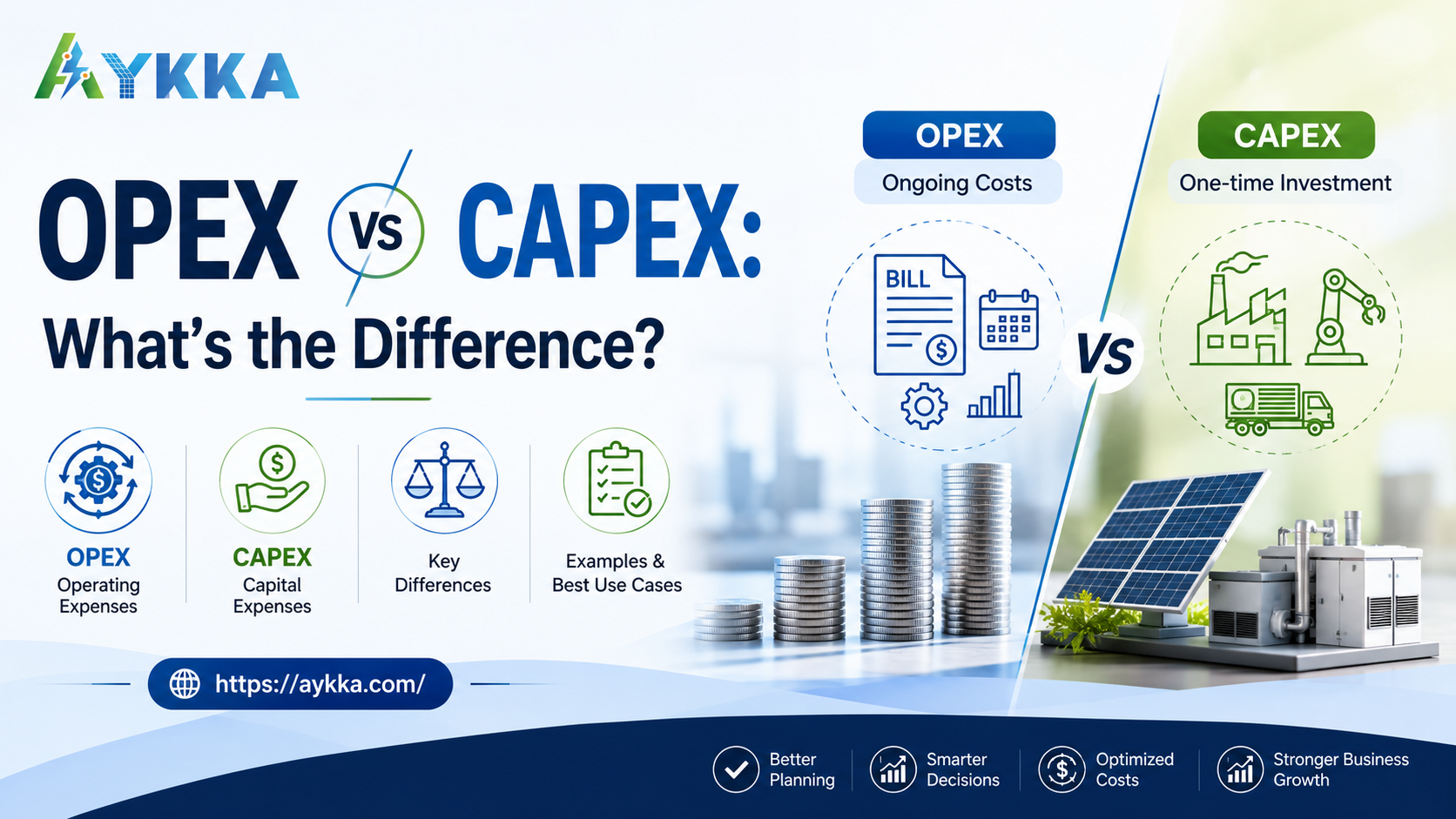
To make sense of that, it helps to pull apart two words that get thrown around loosely OPEX and CAPEX.
CAPEX is capital expenditure. That’s the upfront money spent to buy something the business will own, like a rooftop solar array sitting on the balance sheet as an asset from day one. OPEX is operating expenditure, the ongoing cost of running the business, the same bucket that covers rent, electricity, or leased equipment. Under a solar opex model, the solar system typically doesn’t belong to the business at all. The cost just shows up as a recurring line item instead of a capital purchase.
Why would a company choose this over ownership? Usually it comes down to not wanting cash locked into hardware, or not wanting to deal with the technical side of running a power system in-house. Ownership in this setup normally sits with the solar provider or a third-party financier though who owns what, exactly, depends on the contract in front of you. That part isn’t standard across the industry.
How Does the OPEX Model Work for Businesses?
The process tends to follow a similar shape from provider to provider, even if the details shift around.
It starts with a site assessment. Someone comes out, looks at the roof or available land, checks the shading, the structure, and how much power the business actually uses day to day. Not every site works for solar, so this step matters more than people expect.
From there, the provider designs a system sized to that specific site and load. A cold storage warehouse running equipment around the clock needs a different setup than an office that’s mostly empty after 6 PM.
Installation comes next, and in most OPEX arrangements, the business isn’t paying for this out of pocket. Once the system’s physically in place, both sides sign an agreement. This is really the document that defines everything: payment terms, how long the contract runs, who fixes what if something breaks. It’s worth reading slowly.
After that, the system just runs. It generates electricity, offsets some portion of grid consumption, and the business pays according to whatever the contract says, sometimes based on how much power was generated, sometimes a flat recurring fee. Maintenance and monitoring usually fall to the provider during this stretch, though again, that’s a contract detail and not a universal rule.
Eventually the contract term ends, and what happens next renewal, removal, some kind of transfer option depends entirely on what was agreed at the start. This is easy to overlook when you’re three years into a ten-year deal and haven’t thought about year eleven.
OPEX vs CAPEX Solar: What Is the Difference?
Factor | OPEX Model | CAPEX Model |
Upfront investment | Minimal or none for the system itself | Full cost paid upfront (or financed via loan) |
System ownership | Usually stays with the provider or financier | Owned by the business from installation |
Maintenance | Generally the provider’s responsibility | Usually falls on the business, directly or via a separate contract |
Payment structure | Recurring usage-based or fixed periodic payments | One-time purchase cost |
Cash-flow impact | Spreads out over the contract term | Larger cash outflow up front |
Financial responsibility | Shared, per contract terms | Sits mostly with the business |
Long-term considerations | Fixed contract period; ownership terms vary by deal | Full ownership and control, but full responsibility too |
Treat this table as a general pattern rather than a rulebook actual terms shift depending on the provider and the deal you negotiate.Businesses evaluating a solar project often need to decide whether to purchase the system or use a third-party financing arrangement. The choice affects upfront investment, ownership, maintenance, and long-term cash flow. To understand these two approaches in detail, read our guide to OPEX vs CAPEX solar models.
What Does a Business Pay Under an OPEX Arrangement?
There’s no single format here. It really comes down to how the provider structures the offer and what gets negotiated.
Providers running an opex model solar program will usually set the specifics in writing rather than leaving them open-ended. A few structures show up often:
- Payment tied to actual energy generated or consumed similar in spirit to a power purchase agreement (PPA)
- A fixed recurring fee, paid regardless of exact output, for use of the system
- Rates that are fixed for the life of the contract, or that include escalation clauses over time
- PPA-style setups, where the payment is directly linked to how much solar electricity was used
Maintenance is typically folded into the deal rather than billed separately, but don’t just assume that to confirm it. Same goes for contract length and how payments might change over time. None of this is standardized industry-wide, so the specific agreement in front of you is really the only source of truth.
Benefits of the OPEX Model for Businesses
A few things tend to draw companies toward this structure:
Lower upfront cost is the obvious one capital that would’ve gone into buying panels and inverters can go toward equipment, hiring, or whatever else the business needs. Cash flow tends to be easier to plan around too, since it’s a recurring payment rather than one large hit.
There’s also the appeal of getting solar power on-site without taking on the responsibilities of owning a power-generation asset, no need to build in-house expertise for something that isn’t really the company’s core business. Depending on how the contract is written, payments can end up more predictable than a grid tariff that moves around on its own.
Maintenance and performance monitoring, when included, mean fewer surprises. Someone else is watching the system and catching issues before they become expensive ones.
None of this guarantees a specific financial outcome for every business. How much value shows up depends on your actual electricity usage, your site, how well the system performs, and the terms you signed. It’s a structure with real advantages, not a formula with a fixed result.
What Are the Limitations of an OPEX Solar Model?
It’s not all upside, and it shouldn’t be presented that way.
The contract commitment is real; these agreements usually run for years, and businesses need to be genuinely comfortable with that timeline before signing, not just optimistic about it. There’s also provider dependency: since the provider owns and often maintains the system, your solar experience is only as good as their service quality.
Some agreements place restrictions on what you can do with your own roof or site while the contract is active. Ownership sits elsewhere too, which means the system doesn’t show up as a business asset that might matter for how you plan your books.
Pricing isn’t always flat for the whole term. Escalation clauses exist in some contracts, so it’s worth knowing exactly how costs could move over the years, not just what year one looks like. Exiting early can also come with costs or conditions that aren’t obvious on a first read.
And performance, who’s on the hook if the system underdelivers due to weather or equipment issues needs to be spelled out clearly, not left as an assumption. Given how much variation exists between providers, having someone review the contract carefully before signing isn’t optional, it’s just sensible.
Who Should Consider an OPEX Solar Model?
This structure tends to get the most attention from businesses with heavy, fairly consistent electricity use because that’s where on-site generation actually offsets something meaningful. Think manufacturing units running equipment through the day, warehouses and distribution centers with large open roofs, offices trying to manage costs without spending capital, retail spaces with predictable hours, hotels running continuous loads, schools and institutional campuses, and other commercial buildings with roof or land space to spare.
That said, fitting into one of these categories doesn’t automatically mean a solar opex model is the right call. Site conditions, current energy spend, and what the business actually wants long-term all factor into whether this arrangement makes sense.
Practical Example of an OPEX Solar Arrangement
Here’s a hypothetical to make this more concrete.
Say a mid-sized manufacturing facility has a large flat roof and burns through a lot of electricity during the day machines running, lights on, standard factory stuff. The business likes the idea of solar but doesn’t want to spend the capital on installing a system right now.Under a hypothetical OPEX deal, a provider assesses the roof, designs a system around the facility’s typical daytime load, and installs it at their own cost. They’d likely hold onto ownership of the system for the length of the contract.
Before signing anything, this business would want to check the proposed rate against its current grid tariff, look closely at the contract length and any escalation terms, nail down exactly who handles maintenance, and understand what happens if the roof needs repairs mid-contract or if they want out early.Again this is illustrative only. Real terms, ownership, and pricing vary by provider and by the specific deal.
What Should Businesses Check Before Choosing an OPEX Solar Model?
Before signing, it’s worth going through this list rather than trusting a summary pitch:
- Contract duration, and what renewal actually looks like
- How payment is structured usage-based, fixed, or some other formula
- How energy pricing is set, and whether it’s fixed or subject to change
- Whether the proposed system capacity actually matches your consumption
- What generation output is realistically expected given your site
- How performance guarantees are defined, and what happens if they’re not met
- Who’s responsible for maintenance, cleaning, and repairs
- Who insures the system, and what happens if it’s damaged
- Who owns the system, both during and after the contract
- What visibility you’ll actually have into system performance
- What early termination costs or conditions look like
- Who’s responsible for roof or site issues that come up
- What happens at the end of the contract removal, renewal, or transfer
Going through this with both finance and operations in the room tends to surface questions people miss when they’re just looking at the headline payment number.
Is an OPEX Solar Model Right for Your Business?
There’s no universal answer here deciding whether an opex model solar setup fits a business depends on how it weighs capital availability against long-term control.
If avoiding a large upfront cost matters more than owning the equipment, or if predictable operating expenses fit better into how the business budgets, OPEX is worth a serious look.
Conclusion
There’s no single right answer between OPEX and CAPEX for solar. It comes down to matching the structure to your capital position, your energy use, and where the business is headed. The opex model in solar can take pressure off upfront costs and shift maintenance to someone else, but it also means committing to contract terms that deserve a real look before you sign, not just a skim. Whatever route a business is leaning toward, the terms payment structure, ownership, contract length matter more than which label gets attached to the deal. Aykka Technovision Private Limited works with businesses figuring out these solar decisions, and the practical advice doesn’t really change from provider to provider: read the contract properly, know what you’re actually paying for, and pick the structure that fits how your business plans to grow, not just what looks cheapest on day one.
Follow @aykka_solar for tips, projects, and updates.
Frequently Asked Questions
What does OPEX mean in solar?
OPEX stands for operating expenditure. In solar, it means paying for power or system access as a recurring cost rather than buying the system outright as a capital asset.
Who owns the solar panels under an OPEX agreement?
In most cases, the provider or a financing partner owns the system for the length of the contract. This isn’t universal, though ownership structures differ between providers, so it’s something to confirm directly rather than assume.
Does the business have to pay for solar maintenance?
Usually not separately, most OPEX contracts fold maintenance into the deal. But the scope of what’s covered isn’t consistent across providers, so it’s worth getting that in writing before you sign.
What should businesses check before signing an OPEX solar contract?
Payment structure, contract length, maintenance responsibilities, performance terms, ownership, and early termination conditions are the big ones. A careful review with finance and legal involved tends to catch things a quick read misses.