

On Grid Solar System: How It Works, Benefits & Cost
Open your electricity bill in May and you’ll probably wince. Fans, coolers, and ACs run for months in Gujarat, and the units pile up fast. That’s often when people start looking at their terrace and wondering if it could earn its keep. Most of them end up reading about grid-connected solar, and for good reason: it’s the simplest rooftop setup, with no battery room and fewer parts to look after. If you’re weighing an on grid solar system in Vadodara, this guide covers how it works, what goes on the roof and in the meter box, where it falls short, what moves the price, and what to check before you hire anyone.
What Is an On-Grid Solar System?
It’s a rooftop solar plant that stays connected to the regular electricity network. Your building uses the solar power first and pulls from the grid for whatever solar can’t cover. You’ll also hear it called grid-tied or grid-connected. Same thing.
If you’ve ever typed what is on grid solar system into a search bar, the short answer is this: solar panels, an inverter, and the utility grid acting as your backup supplier and, where rules allow, your buyer for surplus power.
Picture a small clinic that’s open from nine to six. The AC, lights, computers and a fridge all run during the day, which is exactly when the panels are producing. If the panels make more than the clinic needs at some moment, the extra can flow out to the grid. After sunset, the clinic draws from the grid the way it always did. Nobody flips a switch.
How Does an On-Grid Solar System Work?
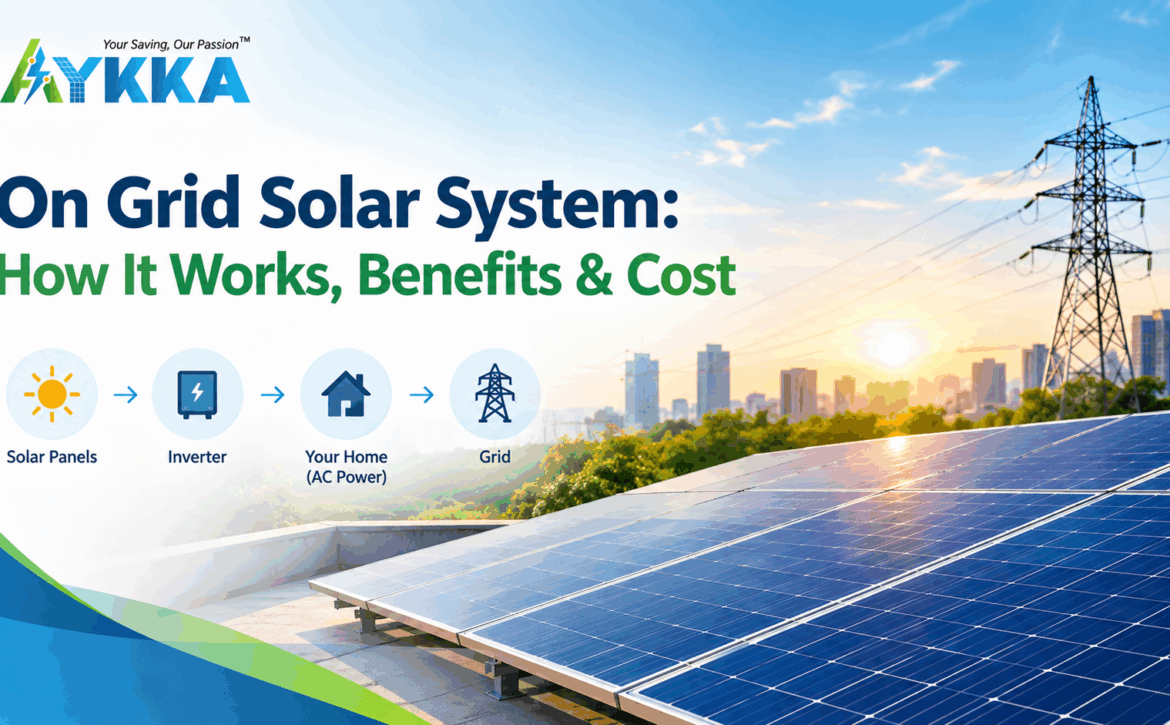
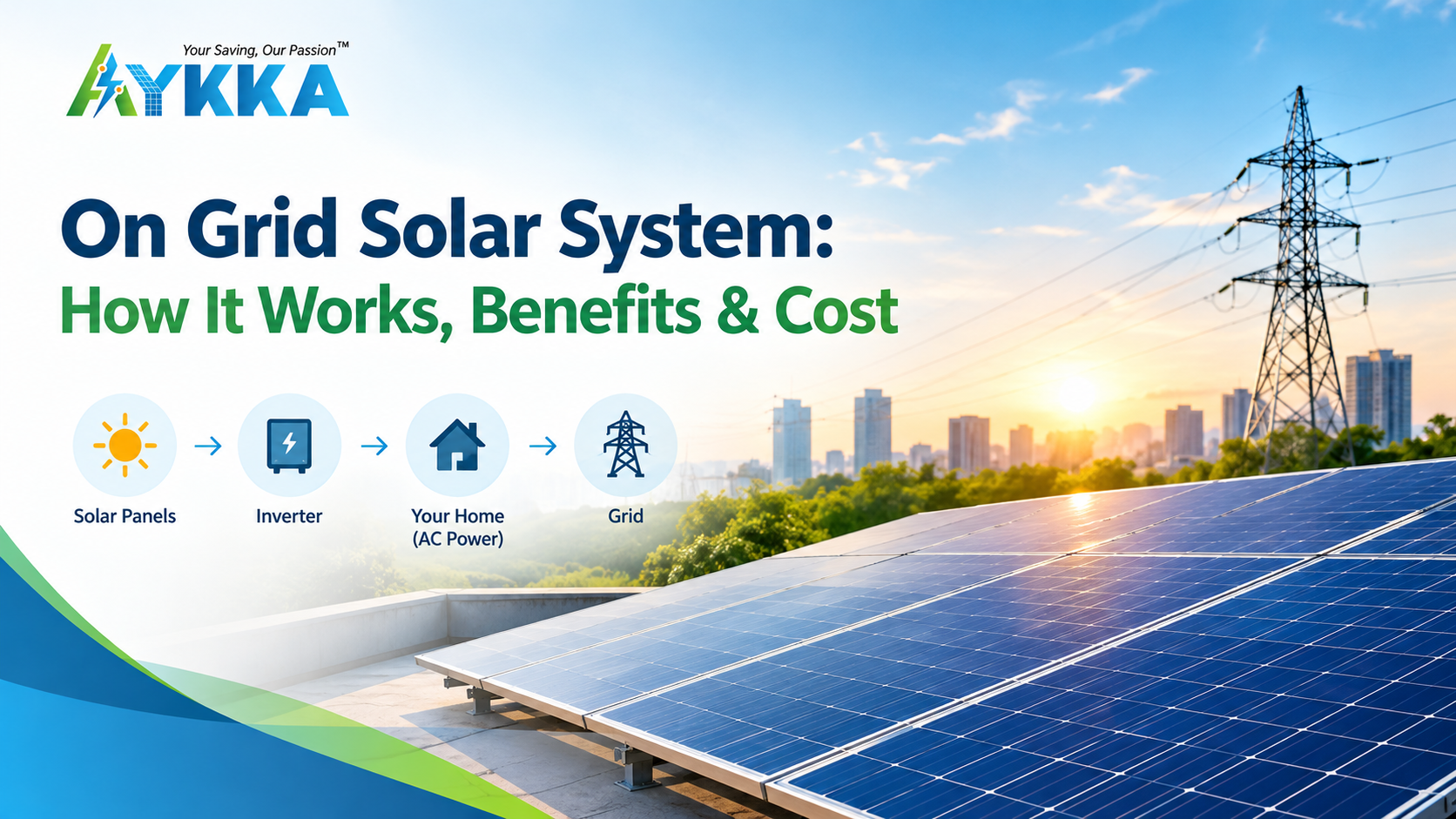
The steps below show how on grid solar system works from the roof to the wall socket:
- The panels make DC power.
Sunlight hits the solar cells and produces direct current, the same kind a battery gives you. - The inverter converts it to AC.
Your fans and fridge run on alternating current. A grid-tied inverter does the conversion and matches the grid’s voltage and frequency. - Your appliances use it.
Solar power is the closest source, so it gets used first. - Surplus goes to the grid.
When the panels produce more than you’re using, the extra can be exported, depending on the net-metering rules that apply to you. - The grid fills the gaps.
At night, on heavy cloud days, or when your demand spikes, the grid tops up the shortfall automatically.
Output isn’t steady, of course. It climbs through the morning, peaks around midday and falls to zero after dark. For a rooftop solar in Vadodara, that means the biggest payoff comes from using electricity in daylight hours. Summer gives long sunny days, though very high panel temperatures shave off a little efficiency. The monsoon brings a dip, and a layer of dust can quietly pull output down if panels go uncleaned for weeks.
Main Components of an On-Grid Solar System
Solar panels. Each on grid solar panel is a set of photovoltaic cells that turn sunlight into DC electricity. Panels are rated in watts, and the combined rating of the whole array gives the system size in kilowatts (kW).
Grid-tied inverter. This is the part that does the thinking. It converts DC to AC, keeps in step with the grid, and shuts itself off if the grid goes down.
Mounting structure. Galvanised steel or aluminium frames hold the panels at the right tilt. They have to survive wind, rain and decades of sun without loosening.
DC and AC protection. Fuses, breakers, surge protection and proper earthing. Nobody photographs these for brochures, but they’re what keeps the plant safe.
Metering. A meter records what you draw from the grid and what you send back. That record is what your bill is calculated from under net metering.
Cables and connections. Distribution boards, connectors and wiring tie it all together. Loose or undersized connections cause losses and faults, so this is a bad place to economise.
Benefits of an On-Grid Solar System
The idea is easy to follow. Every unit your panels supply is a unit you don’t buy at the tariff rate, and that’s where the savings logic starts.
A standard on grid solar power system also skips the battery bank. That keeps the design simpler, and it avoids battery replacement down the road. Your terrace gets put to work, and surplus generation can be used according to the export or net-metering arrangement in force.
What you’ll actually save is a different question. It depends on:
- how much electricity you use, and when
- the size of the system
- how much sunlight your roof really gets
- your tariff category
- roof condition and layout
- local regulations
- the export and net-metering terms
So be wary of anyone who quotes a neat percentage before they’ve seen your bills or your roof.
Limitations and Things to Know Before Installation
Solar suits plenty of buildings, but not all of them equally. A few honest points:
No power during a grid outage. Surprising to many people, when the grid fails, an on-grid solar power system shuts down too, even in bright sunshine. That’s anti-islanding protection. If your panels kept pushing electricity into a dead line, they could injure the lineworkers repairing it. It’s a safety feature, not a fault.
You still depend on the grid. The system is designed around having a grid to balance supply and demand.
Shade and orientation matter. A water tank, a parapet wall, a neighbor’s new floor, or a tree can cut output more than you’d expect.
The money goes in first. You pay upfront and recover it gradually through lower bills.
Paperwork is part of the deal. Approvals, inspections, and meter changes follow your distribution company’s process, and that takes some patience.
Sizing cuts both ways. Too small and you leave savings unused. Too big and you may export more than is useful under current rules.
What Affects the Cost of Rooftop Solar in Vadodara?
There’s no single installation price, and anyone who quotes one without seeing your property is guessing. Two buildings on the same street can get very different quotes. The main reasons:
- System capacity. Bigger plants cost more in total, though the cost per kW often drops as size goes up.
- Panel technology. Efficiency, warranty terms and brand all affect price.
- Inverter choice. Rating, features and monitoring options vary a lot.
- Mounting structure. The design depends on roof type: RCC terrace, metal shed or sloped roof.
- Electrical work. Cable runs, earthing and any distribution board upgrades are specific to each site.
- Metering. Net-meter installation and related fees follow the distribution company’s rules.
- Installation complexity. Height, access, shading workarounds and extra protection all add effort.
When you read a quotation, try to separate it into parts. The system price is the equipment: panels, inverter, structure and cables. Installation cost covers labour, transport, commissioning and any civil work. Additional electrical work is whatever your existing wiring needs. Ongoing maintenance means cleaning, inspections and occasional inverter servicing.
Then there’s the subsidy. The central government’s PM Surya Ghar: Muft Bijli Yojana has offered support for eligible residential rooftop systems, and the local distribution company in this area is MGVCL. Eligibility, amounts and procedures change, so check the official portal or ask your installer to confirm what’s current. Same goes for prices: treat a written, dated quotation as the real number, not a figure from an article.
Comparing On-Grid, Off-Grid and Hybrid Solar
The on grid vs off grid vs hybrid solar system choice mostly comes down to two questions: is your grid reliable, and do you need power when it fails?
Feature | On-Grid | Off-Grid | Hybrid |
Grid connection | Yes | No | Yes |
Battery required | No | Yes | Yes |
Backup during outage | Generally no | Yes, within battery and system limits | Yes, within battery limits |
Excess solar handling | Can be exported, subject to rules | Stored in batteries; wasted if full | Charges batteries first, then may export depending on setup |
Typical use case | Homes and businesses with a dependable grid and daytime use | Remote sites with no grid access | Properties wanting bill savings plus backup |
Initial complexity | Lower | Higher | Highest |
Broadly, on-grid fits buildings that mainly want lower bills and have a dependable supply. Off-grid is for places the grid doesn’t reach. Hybrid suits people who want both savings and backup and are fine with higher cost and more equipment. Think of this as a general guide, not a recommendation for your finances.
Is an On-Grid Solar System Suitable for Your Home or Business?
By now you know what on grid solar system equipment does and doesn’t do. The harder question is whether it fits your building. Go through these before you call anyone.
Pull out your last six to twelve electricity bills. Steady, higher consumption usually makes solar easier to justify. Next, look at your roof: how much clear space is there once you account for tanks, staircase heads and ventilation units? Is the surface sound, or does it leak? Stand up there between about nine in the morning and four in the afternoon and note what throws shadows.
Think about when you use power. Shops, offices, clinics and small workshops that run mostly in daytime tend to line up well with solar generation. A home where everyone’s out until evening may use less of its own solar directly.
Then be honest about backup. If power cuts are frequent and you can’t tolerate them, a grid-only setup won’t solve that, and a hybrid design deserves a conversation. Finally, weigh your budget against the upfront cost and any subsidy you may qualify for, and check net-metering terms, capacity limits and approvals with the distribution company.
An on grid system tends to work best when daytime use is meaningful, the roof is sound and unshaded, and uninterrupted backup isn’t critical. If your answers lean the other way, ask about alternatives before committing.
What to Check Before Installing an On-Grid Solar System in Vadodara
Most problems with solar plants trace back to decisions made before installation. Before you sign off on a rooftop solar installation, ask for these:
- A physical site visit. Someone should measure the roof, check access and note obstructions. A quote given purely over the phone is a red flag.
- Shadow analysis. Shading should be built into the output estimate. Even partial shade on one on grid solar panel can drag down the other panels wired in the same string.
- Roof strength and waterproofing. Confirm the roof can carry the structure and that fixing it won’t create leaks.
- Sizing from your bills. Capacity should come from your consumption pattern, not a standard package.
- Inverter details. Capacity, certifications and monitoring.
- Installation quality. Cable routing, earthing, structure fixing and weatherproofing.
- Safety gear. Breakers, surge protection and earthing should be specified, not assumed.
- The metering process. Who files the net-metering application, and how long does it usually take?
- Warranties and support. Panel, inverter and workmanship warranties, in writing, plus who you call when something stops working.
- Paperwork. Datasheets, approvals and commissioning reports should land in your hands.
Aykka Technovision Pvt. Ltd. (Aykka) is one of the companies that can help with site evaluation, system design and installation. Whoever you pick, they should be willing to walk you through every item above. Vadodara’s heat, monsoon cloud cover and dust all shape real-world output, which is why a proper local assessment beats an online calculator.
How to Choose the Right Solar Installer
Comparing quotes is easier if you know what a good one looks like. Look for an installer who has done similar residential or commercial projects and can show you some of them. They should assess your roof properly instead of quoting from a photo. The quotation should itemise capacity, components and charges, and name the brand, model, wattage and inverter rating. Warranty terms should say how long coverage lasts and who handles claims.
Pay attention to how the crew works, too: trained people, proper protection devices and tidy earthing say a lot. Ask who helps with applications and approvals, and how maintenance and fault calls are handled. Familiarity with local installation and metering requirements saves time and rework.
If you’d like to read more before booking a visit, you can look through residential rooftop solar solutions or commercial rooftop solar installation.
Conclusion
An on-grid solar system lets your property use rooftop power first and lean on the grid for the rest. The upsides are lower purchased electricity, better use of idle roof space and a simpler design without batteries. The downsides are no backup in a blackout, sensitivity to shade, an upfront investment and some metering formalities. Whether it makes sense depends on your roof, your usage and how much you need backup. A properly sized rooftop solar system can suit many homes and businesses, but only after someone has looked at the building properly. A sensible next step is to collect your recent bills and get your rooftop evaluated before choosing a system. Aykka can help with that assessment, and comparing it with other proposals is a good idea.
Frequently Asked Questions
What is an on-grid solar system?
It’s rooftop solar that stays connected to the normal electricity grid. Your panels power the building first, and the grid fills in whatever the sun can’t, like evenings and cloudy spells. Where net metering applies, extra daytime power can go back to the grid. Most setups don’t need a battery.
How does an on-grid solar system work?
To see how an on grid solar system works, just follow the power. Panels make DC electricity, the inverter turns it into AC, and your lights, fans and machines use it straight away. Any surplus can go to the grid where rules allow. After sunset, the grid takes over without you doing anything.
Does an on-grid solar system work during a power cut?
Not in the standard setup. The inverter switches off when the grid goes down, even in bright sun, so that line workers repairing the wires stay safe. That’s called anti-islanding. If you want power during cuts, you’ll need batteries and a hybrid inverter. Ask your installer about this before you buy.
How much does an on-grid solar system cost in Vadodara?
There’s no single number. The price shifts with system size, panel and inverter choice, roof type, wiring work and metering. Subsidies and rates change too, so any figure you read online can go stale. Ask for a written, itemised quote after someone has seen your roof, and check whether a subsidy applies to you.
Is a battery required for an on-grid solar system?
No. A standard on grid system uses the grid as its backup, so there’s no battery to buy or replace. That keeps it simpler and usually cheaper. The catch is that you won’t have solar power during a blackout unless you add batteries or switch to a hybrid design.